

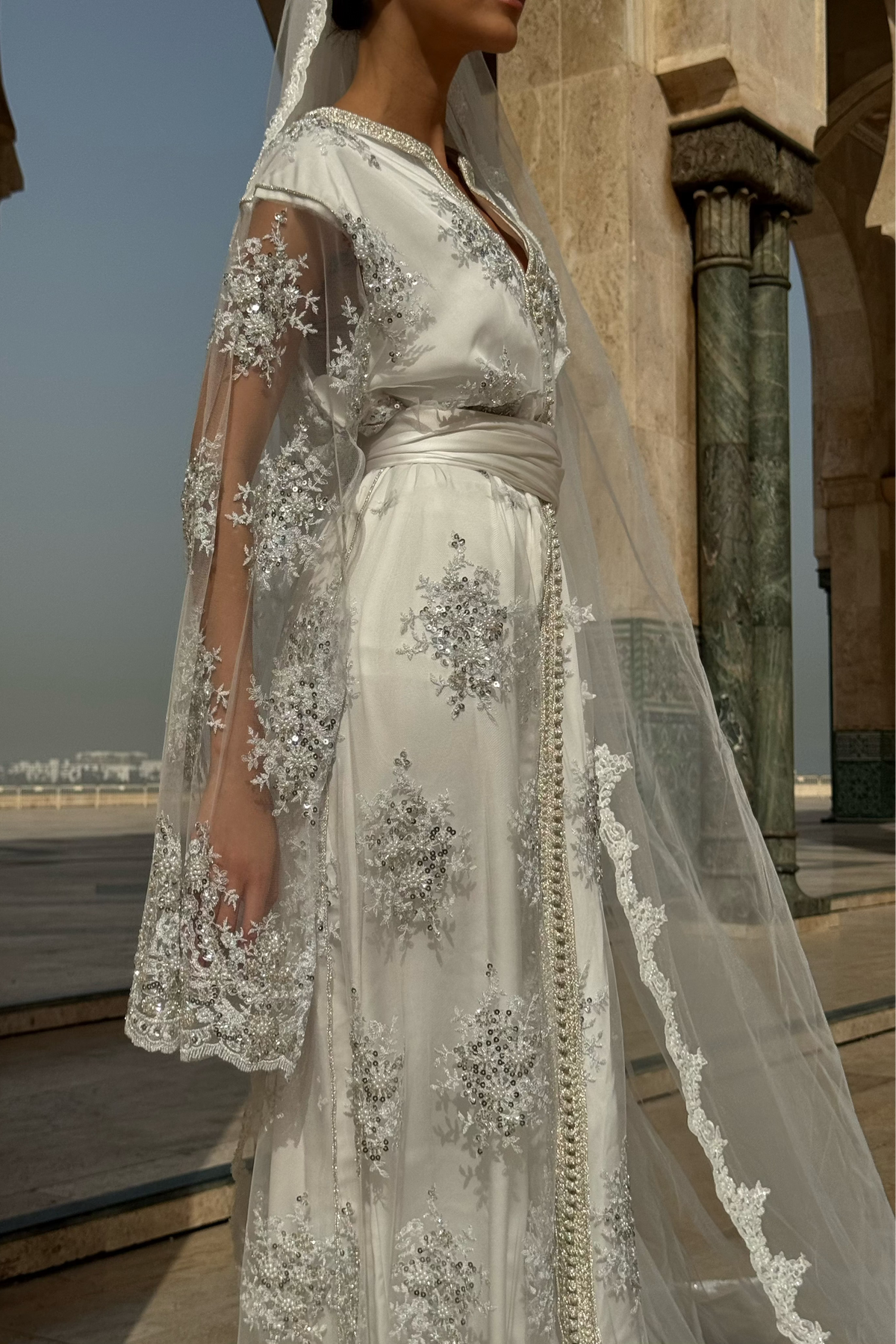
Moroccan Wedding Dress: A Complete Guide for the Bride
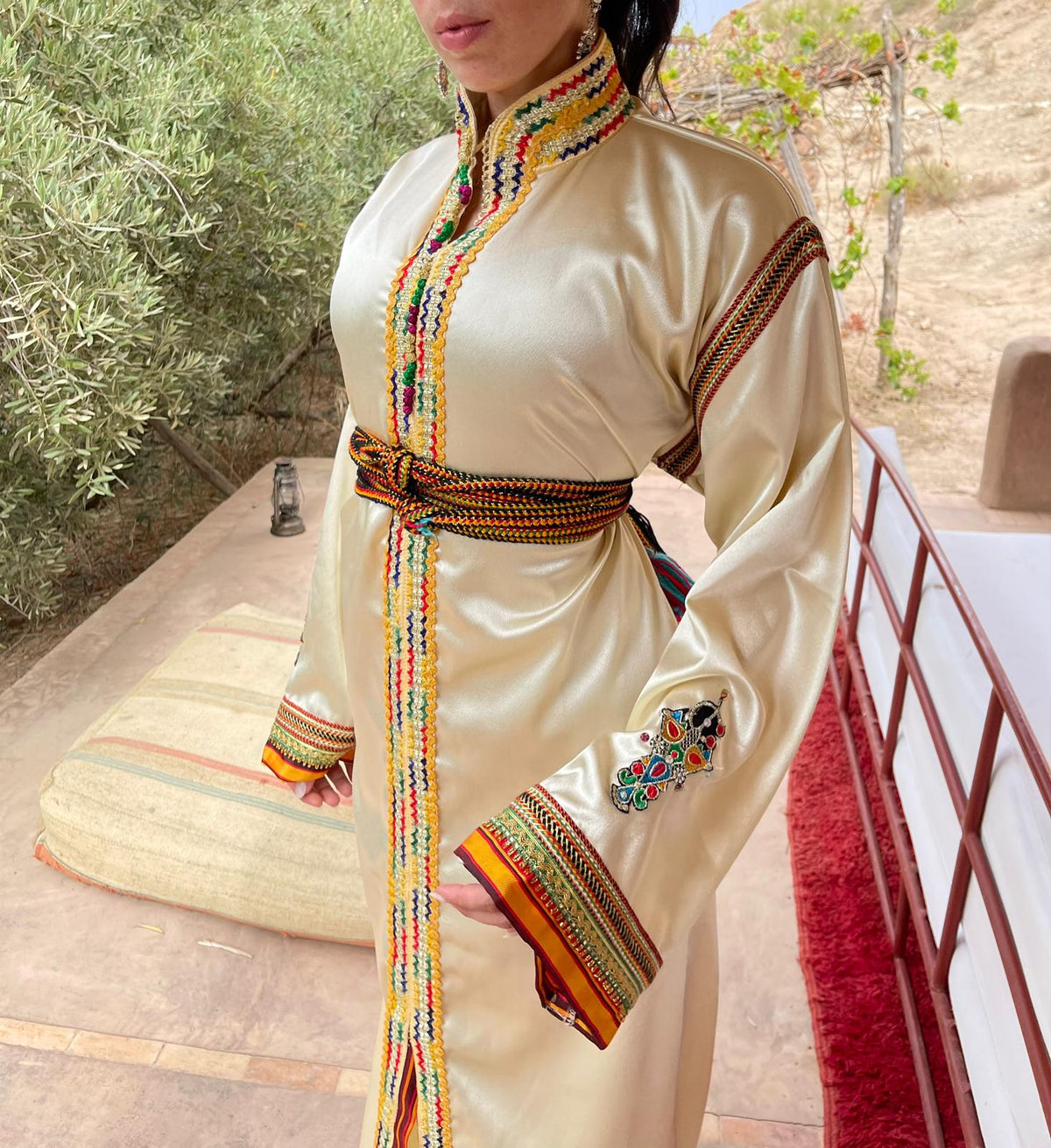
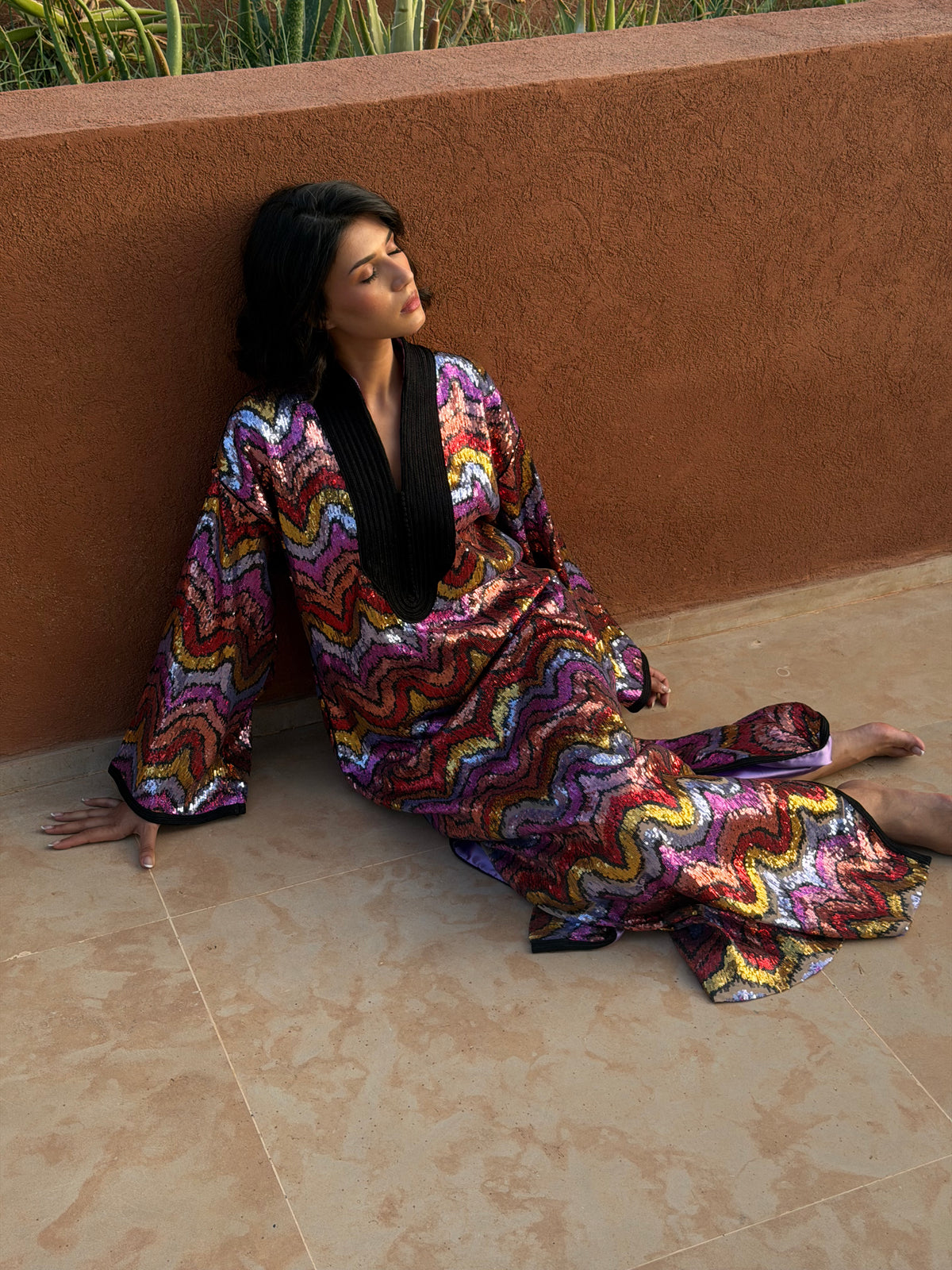
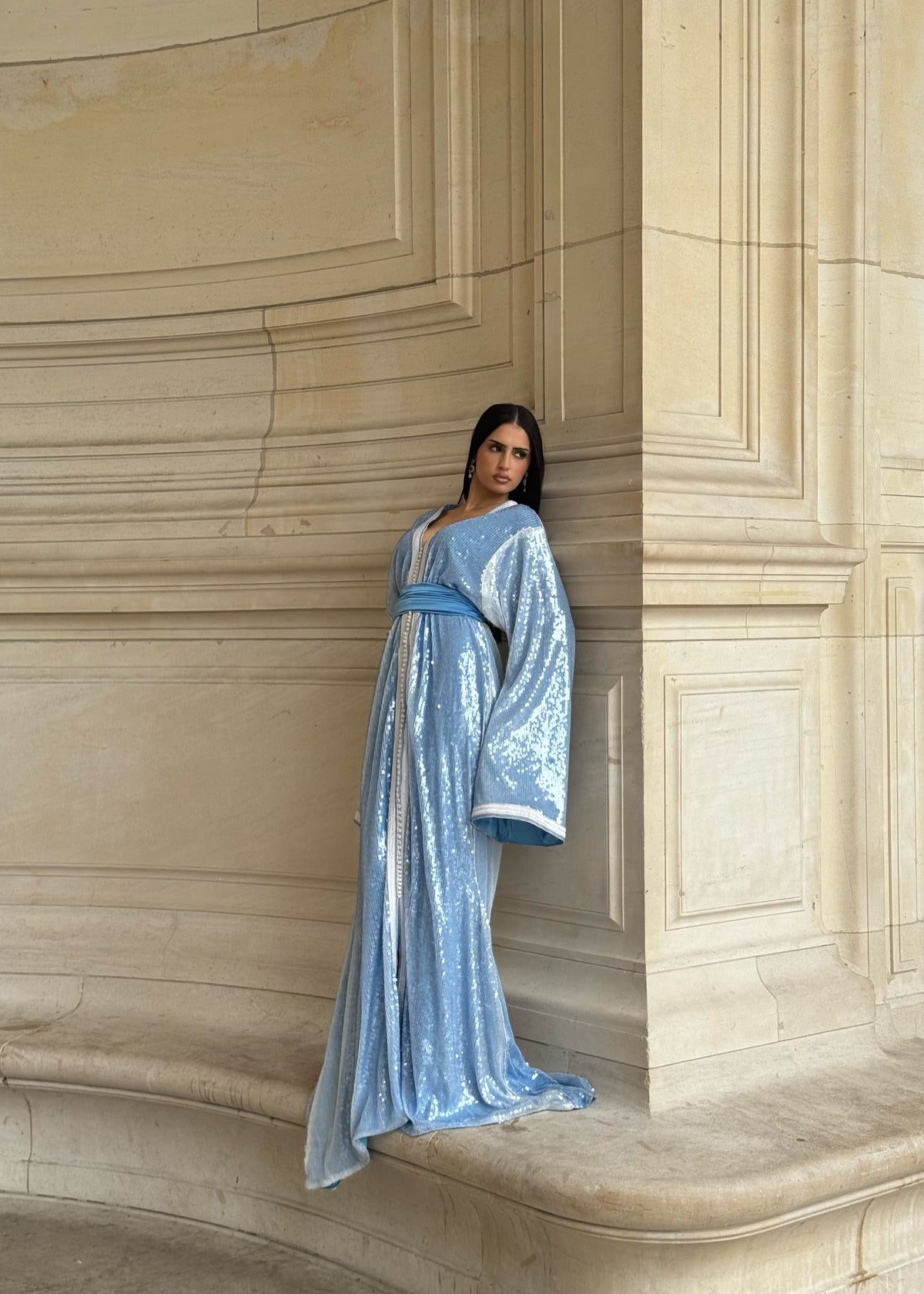
A Moroccan wedding dress is usually a takchita or a bridal kaftan, worn across several ceremonies: the henna night, the engagement, then the big day, when the bride often changes outfits more than once. Choosing well means matching your style, your figure, the fabrics and the flow of the celebration. Here is the complete guide, from henna night to the wedding day.
Bridal kaftan or takchita: what's the difference?
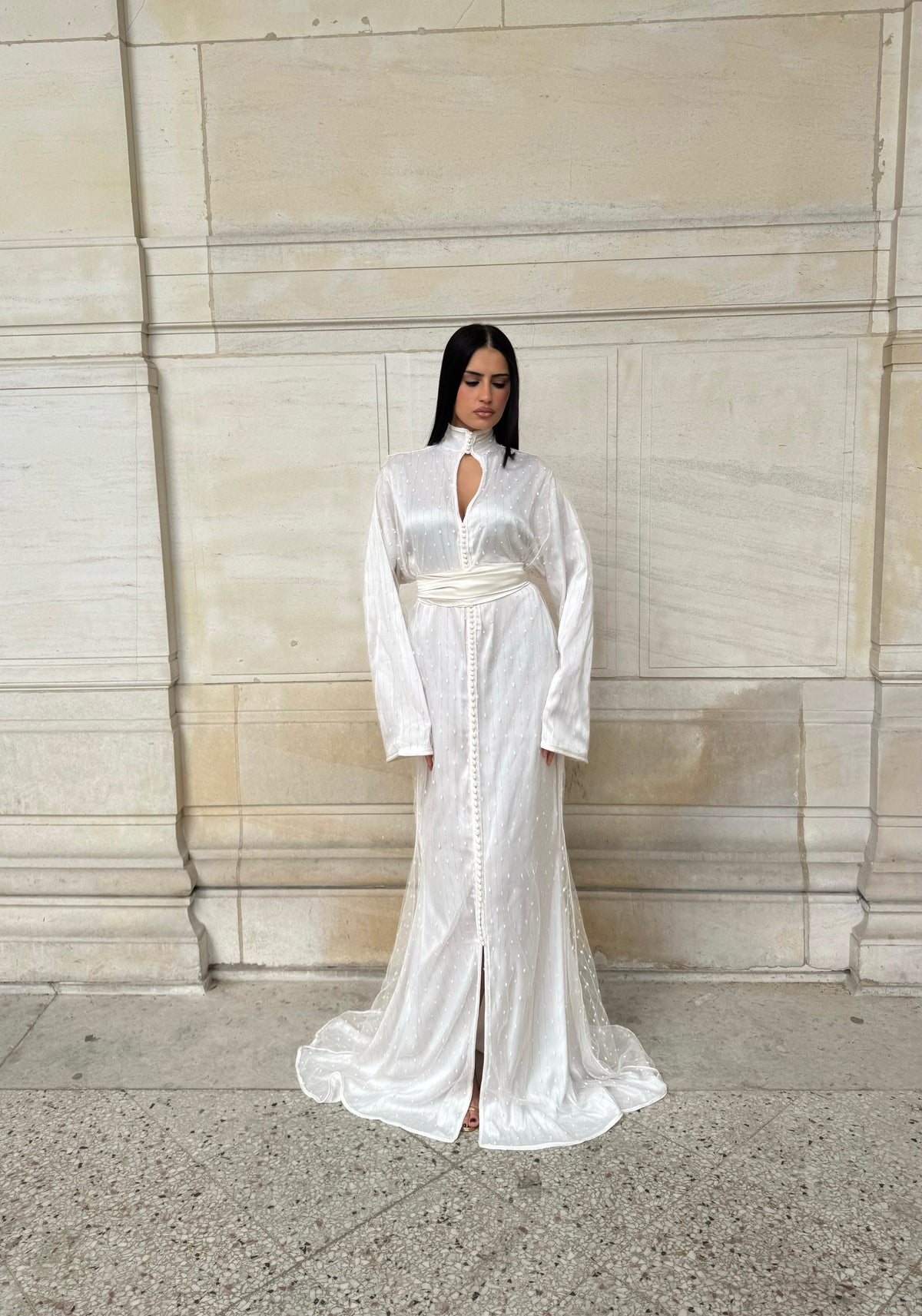
The kaftan is a long, one-piece dress worn on its own. The takchita is made of two pieces: an underdress (the tahtia) covered by an open overdress (the dfina), held together by an ornate belt (the mdamma). It is the traditional outfit of the Moroccan bride, a symbol of prestige and refinement. To learn more about it, read what is a takchita.
A look for every ceremony
A Moroccan wedding unfolds in several stages:
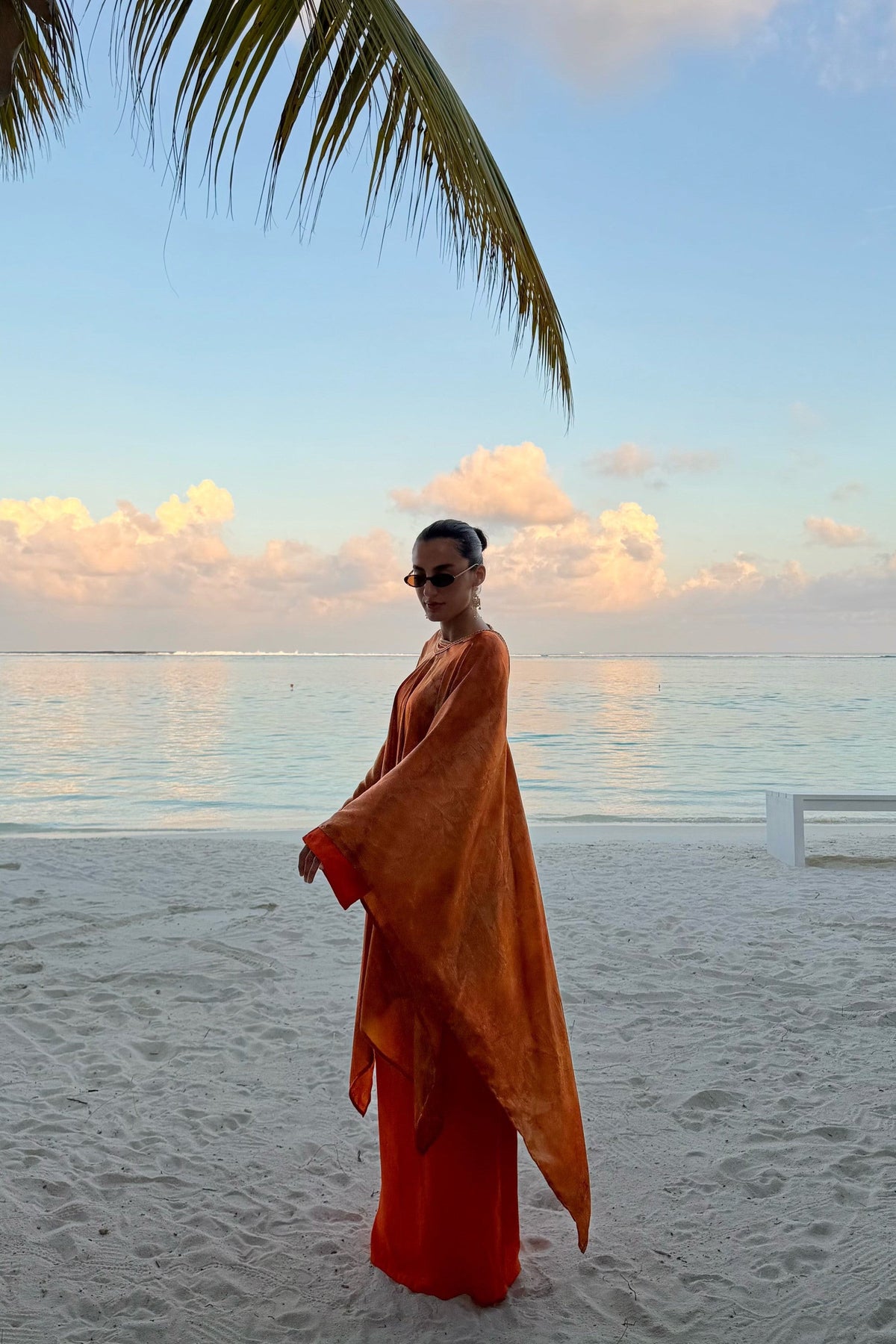
- The henna night: an embroidered kaftan in warm tones, for an intimate, festive evening. See the henna ceremony and what to wear.
- The engagement: a refined, luminous piece.
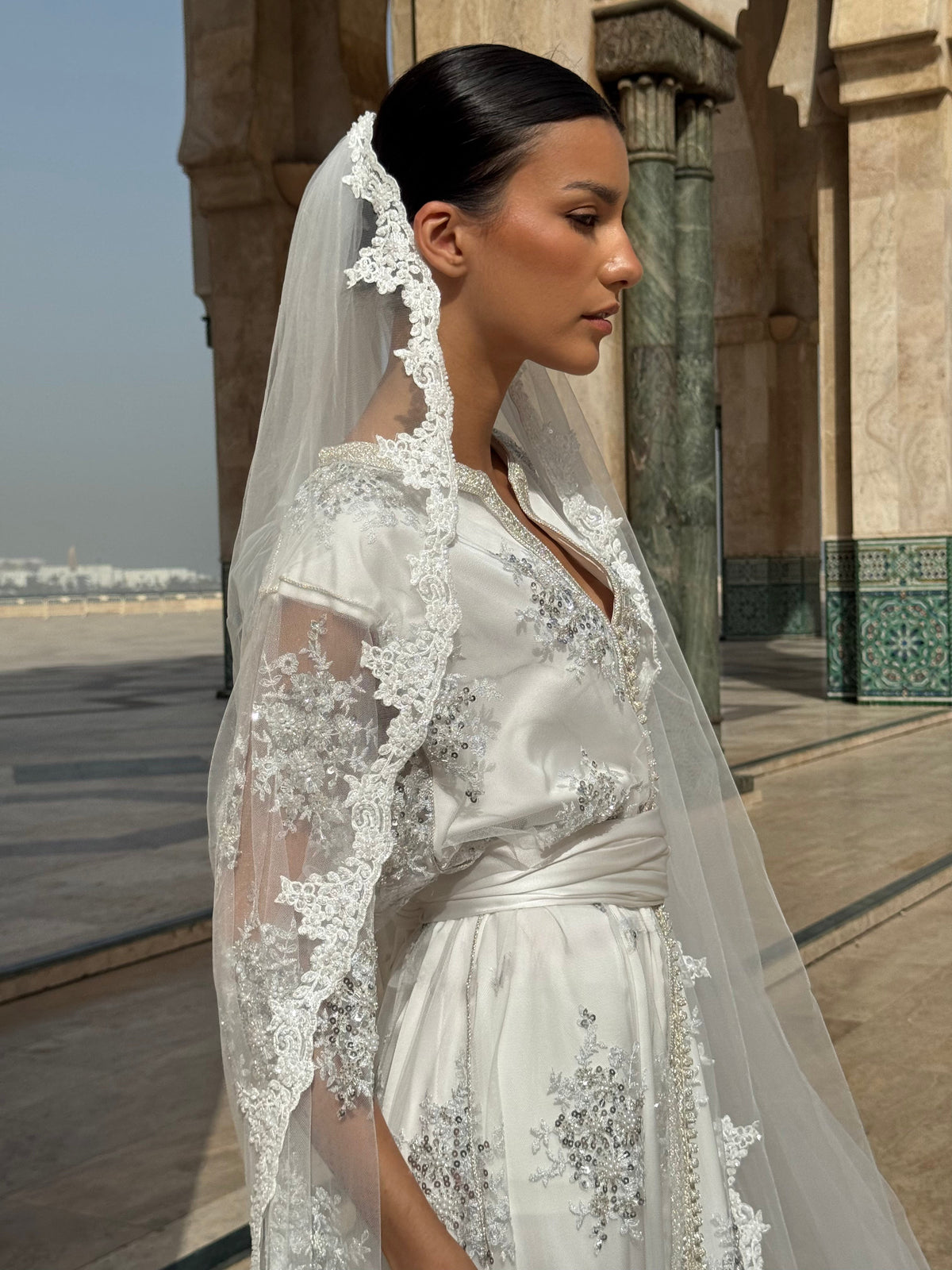
- The wedding day: a richly worked bridal takchita, the most ceremonial outfit, often followed by several outfit changes during the evening.
Discover our selection of bridal kaftans and takchitas.
Which wedding dress style should you choose?
Before you look at models, decide on the mood you want for your day:
- Traditional and majestic: an embroidered takchita, a defined mdamma belt, white, ivory or gold.
- Romantic and fluid: chiffon, lace and tulle for an airy silhouette, ideal for the henna night or a summer ceremony.
- Modern and minimal: straight cuts, embroidery focused on the bodice and sleeves, few layers.
Many brides mix these styles across the celebration: that is the beauty of a wedding with several ceremonies.
Choosing a dress for your body shape
The cut matters as much as the fabric. A few pointers:
- Hips wider than shoulders: a belted waist and a gently flared skirt balance the silhouette.
- Broader shoulders: a V-neck and fluid sleeves soften the upper body.
- Defined waist: the mdamma and fitted cuts naturally highlight it.
- Straight figure: a belt and structured fabrics (brocade, organza) add shape.
- Petite: favour vertical lines and avoid heavy volumes.
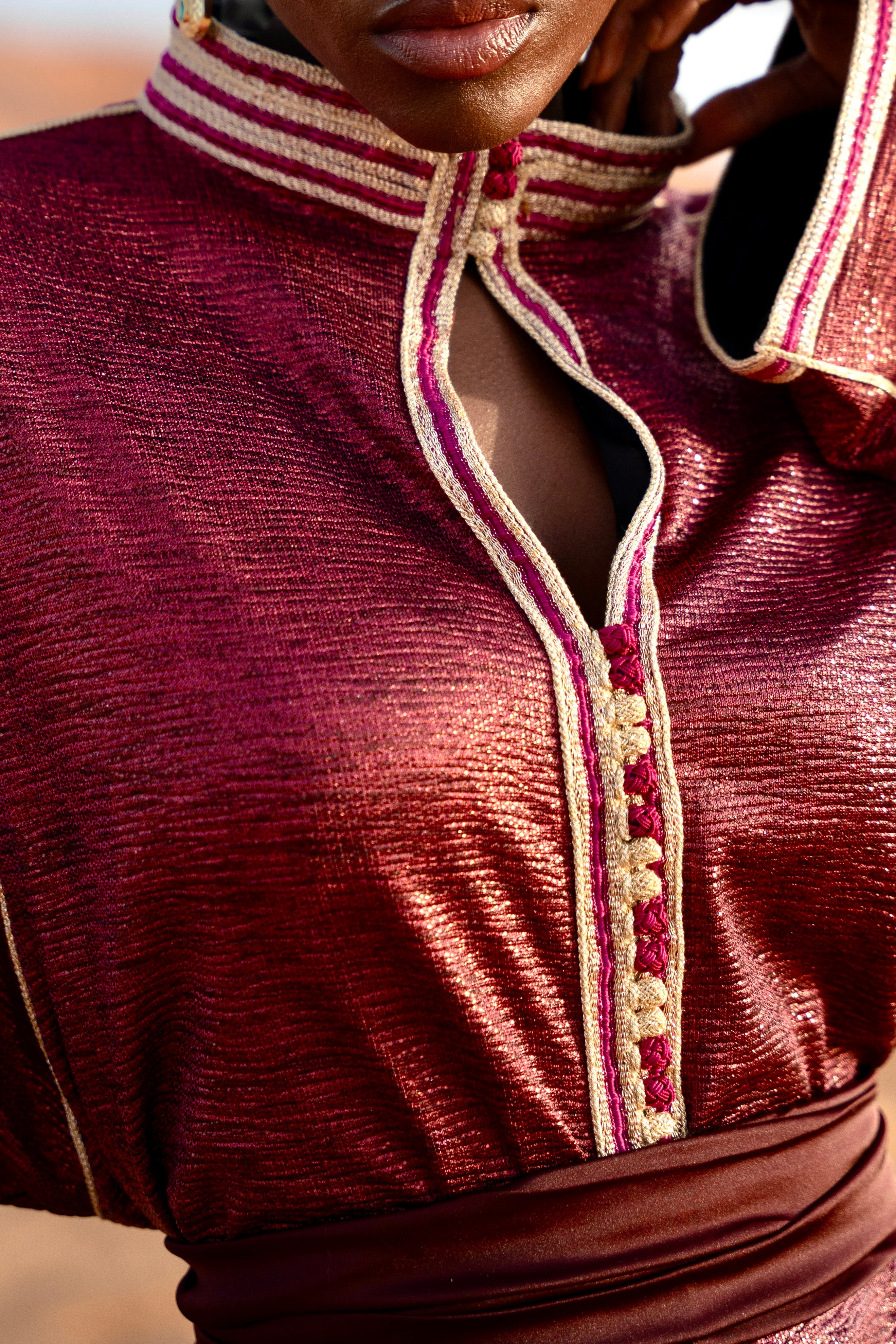
The detail that changes everything: the neckline (V, round, mandarin collar) and the sleeve length. To go further, read our guide how to choose your kaftan.
Bridal fabrics and embroidery
Luminous silk, deep velvet, Calais lace, flowing chiffon and beaded tulle: fabrics are chosen for their drape and their shine under the lights. Hand embroidery, beads and rhinestones are concentrated on the bodice and sleeves for a couture finish. You can also explore our Kabyle dresses and kaftans for a Berber inspiration.
Moroccan dress or Western dress?
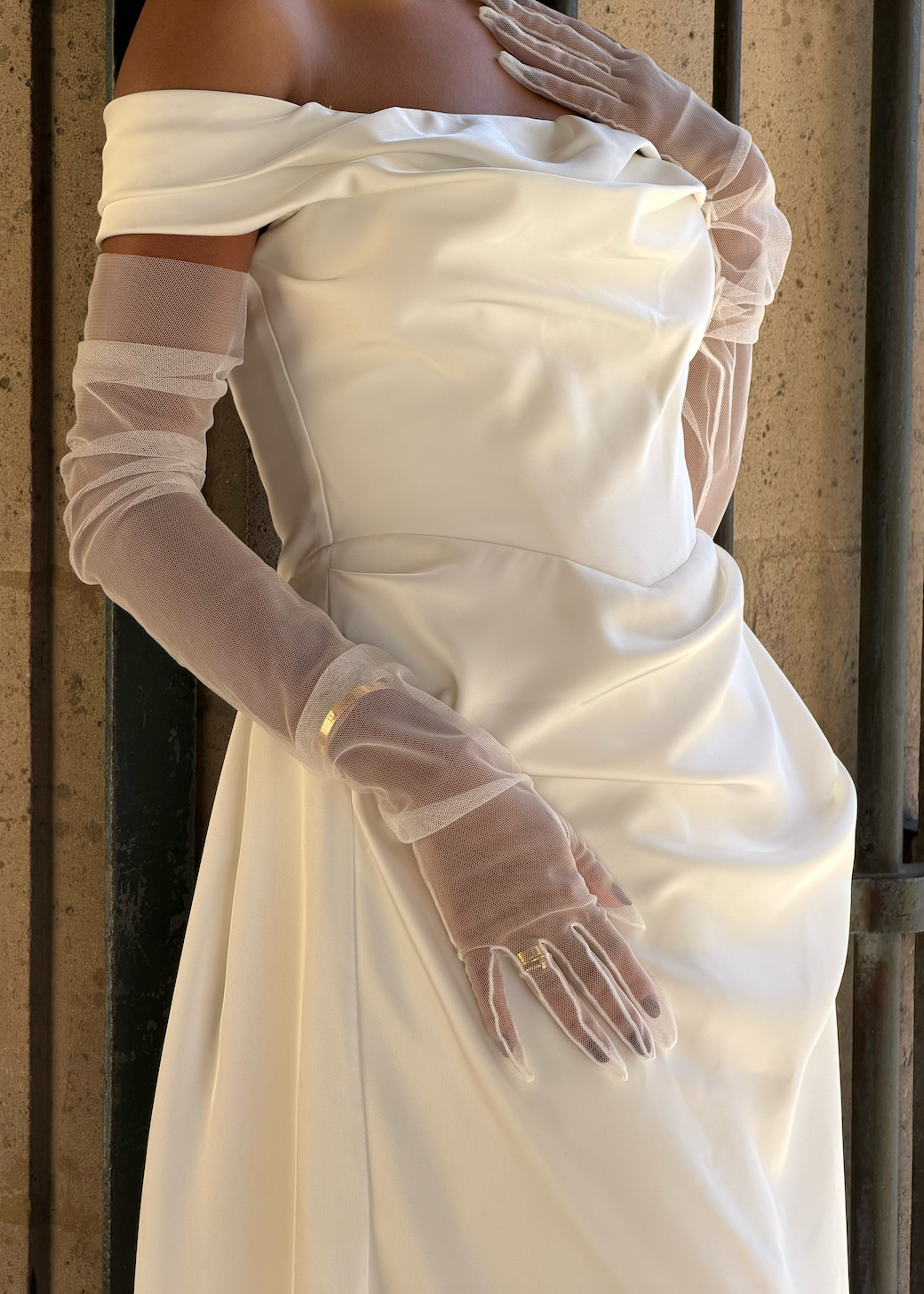
More and more brides choose both: a Western wedding dress for the ceremony and an oriental takchita for the reception. Our wedding accessories (veils, capes, detachable sleeves) let you personalise each look.
Made-to-measure and fittings
On the big day, nothing should be left to chance. We offer alterations and made-to-measure on a selection of models. Check our size guide to find your ideal fit, and plan your fittings early enough to leave time for alterations.
Attending as a guest rather than the bride? See our ideas for an oriental wedding guest outfit.
FAQ — Moroccan wedding dress
What is the Moroccan wedding dress called?
The most traditional outfit is the takchita, a two-piece ensemble (tahtia and dfina) held by a belt, the mdamma. The one-piece bridal kaftan is also widely worn.
How many outfits does a Moroccan bride wear?
There is no fixed rule: the bride usually wears one outfit for the henna night, one for the engagement, and often changes several times on the wedding day.
Can you wear a white gown and a takchita on the same day?
Yes. Many brides wear a Western wedding dress for the ceremony and a takchita for the reception.
What colour should a bridal takchita be?
White, ivory and gold are the classics for the wedding day; warm tones and green are common for the henna night.