
What Is a Takchita? Meaning, Styles and Price
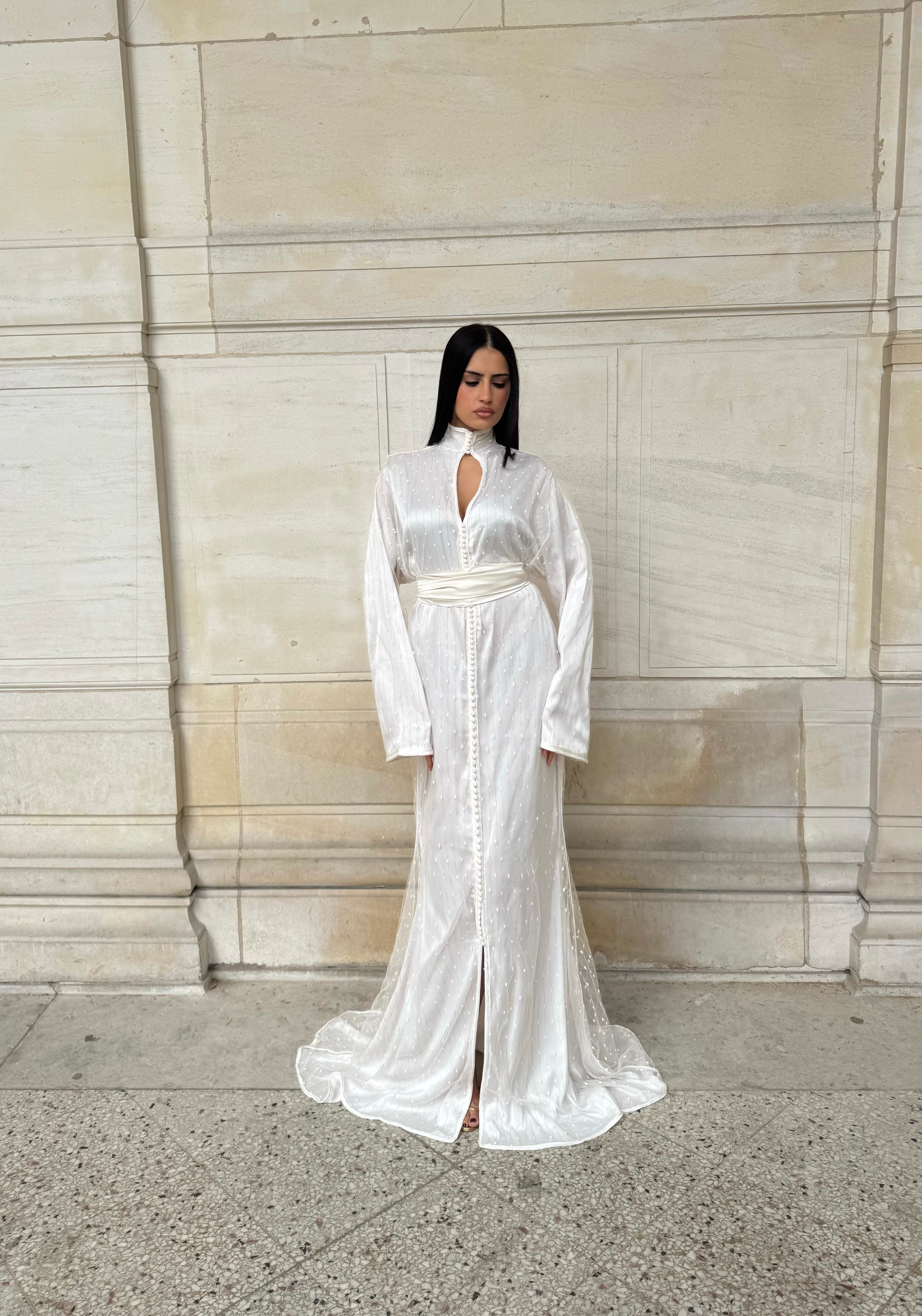
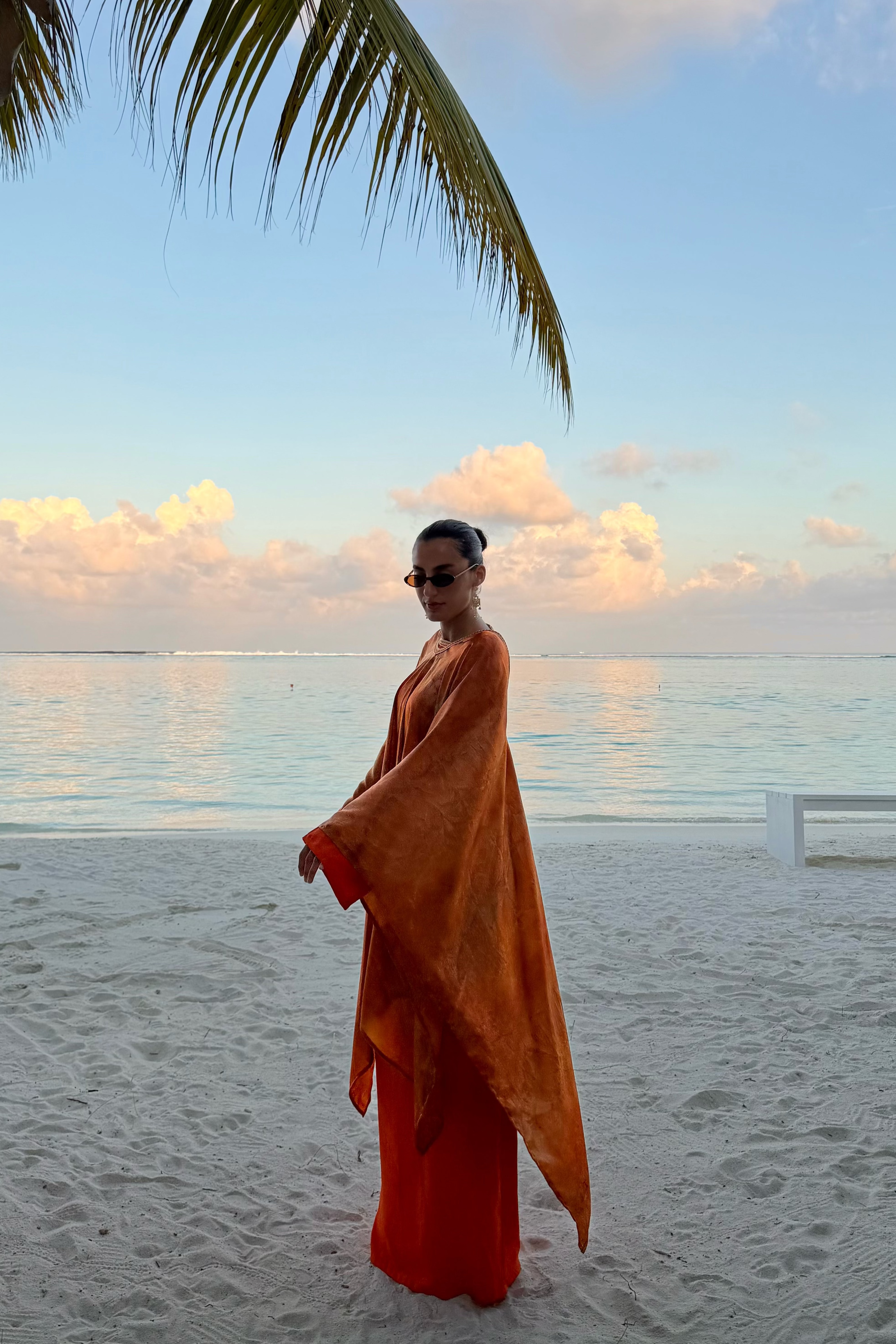
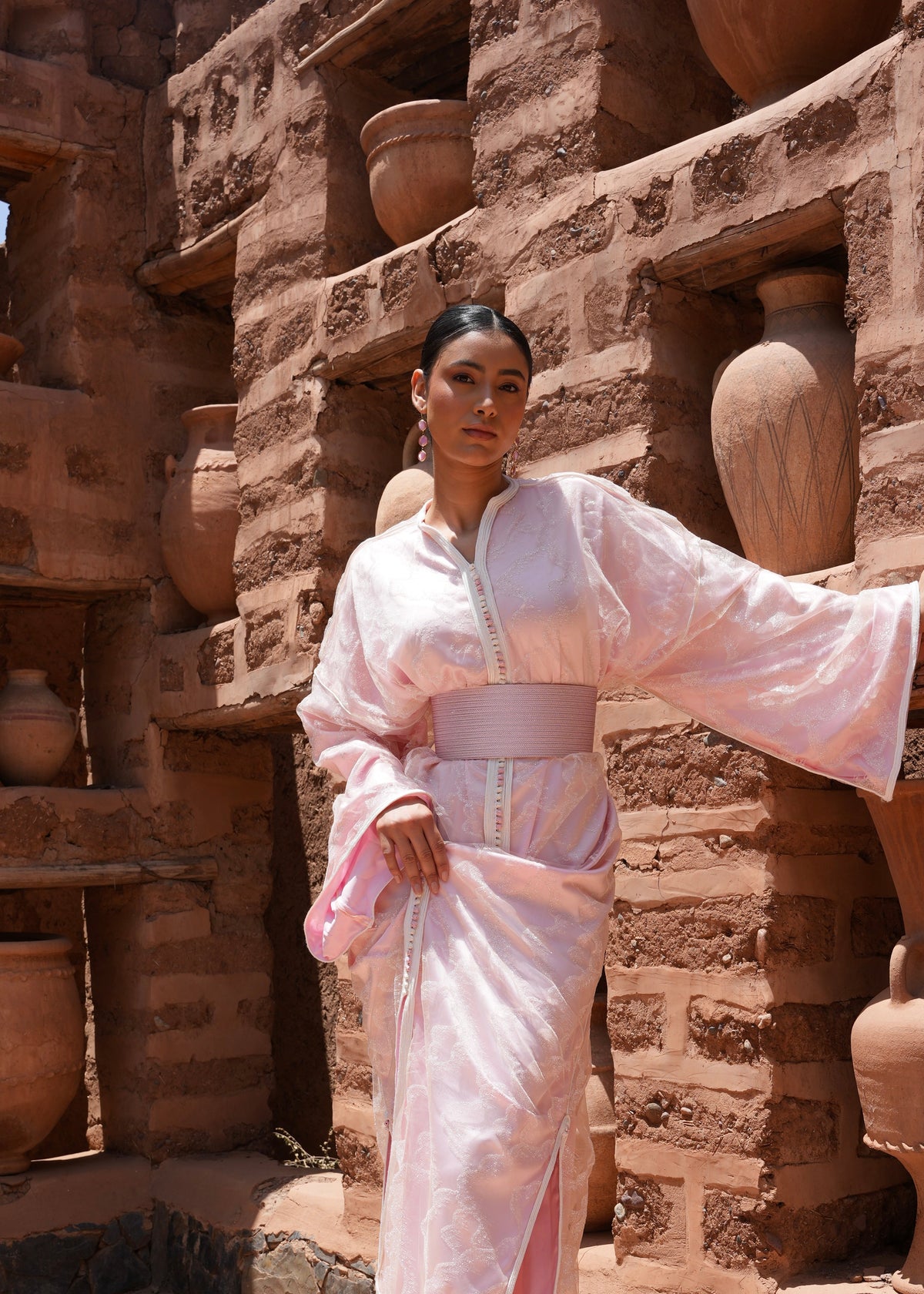
A takchita is Morocco's signature women's ceremonial outfit: a two-piece ensemble made of an under-dress, the tahtiya, and an open, richly decorated over-dress, the dfina, cinched at the waist by an ornate belt, the mdamma. This layering, enriched with sfifa braid, aâkad button-loops and embroidery, is what sets the takchita apart from the kaftan, which is worn as a single piece. It is reserved for the biggest occasions: weddings, the henna night, engagements and Eid.
Below, we explain exactly what a takchita is, how it differs from a kaftan, its price, its fabrics and when to wear it.
What is a takchita?
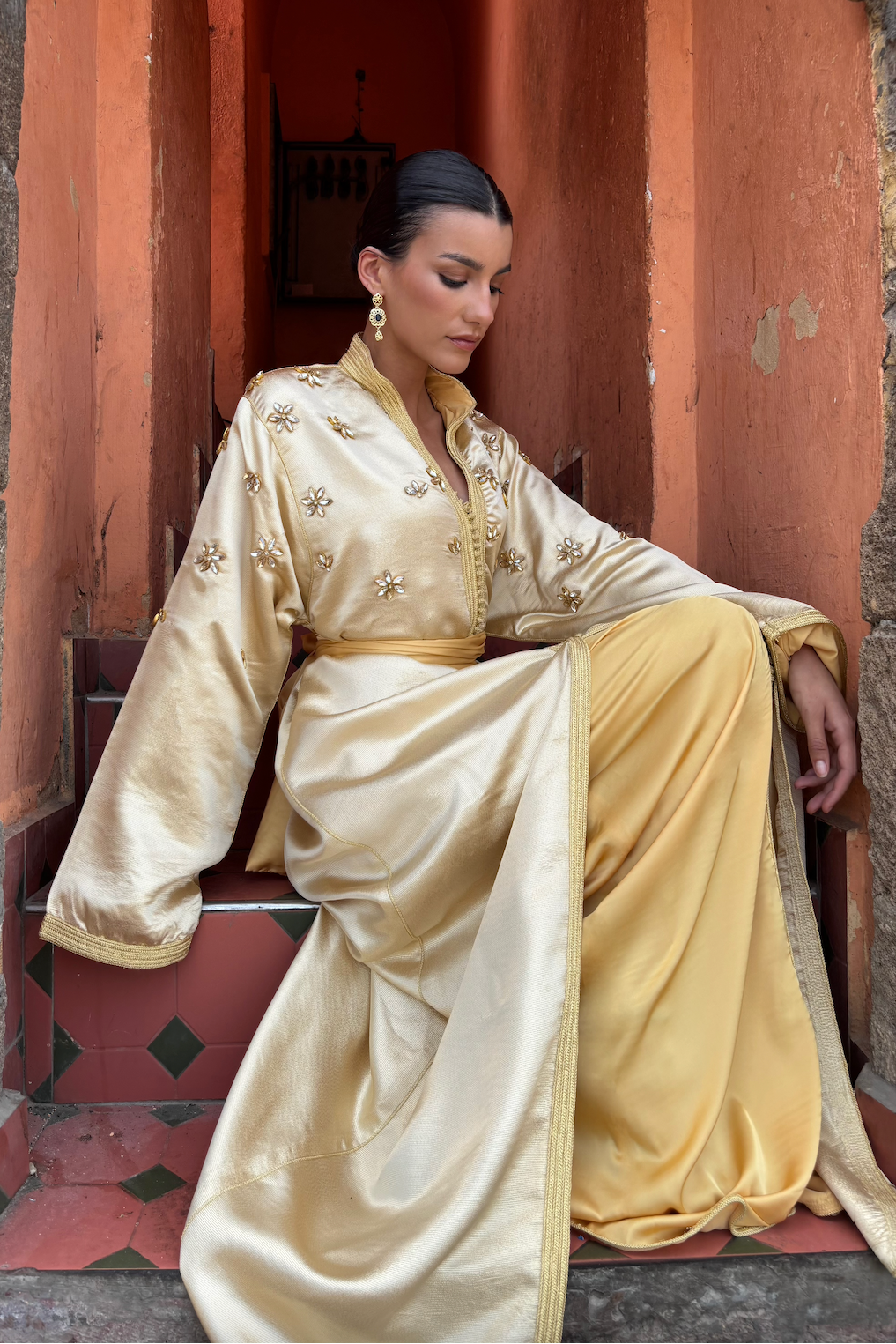
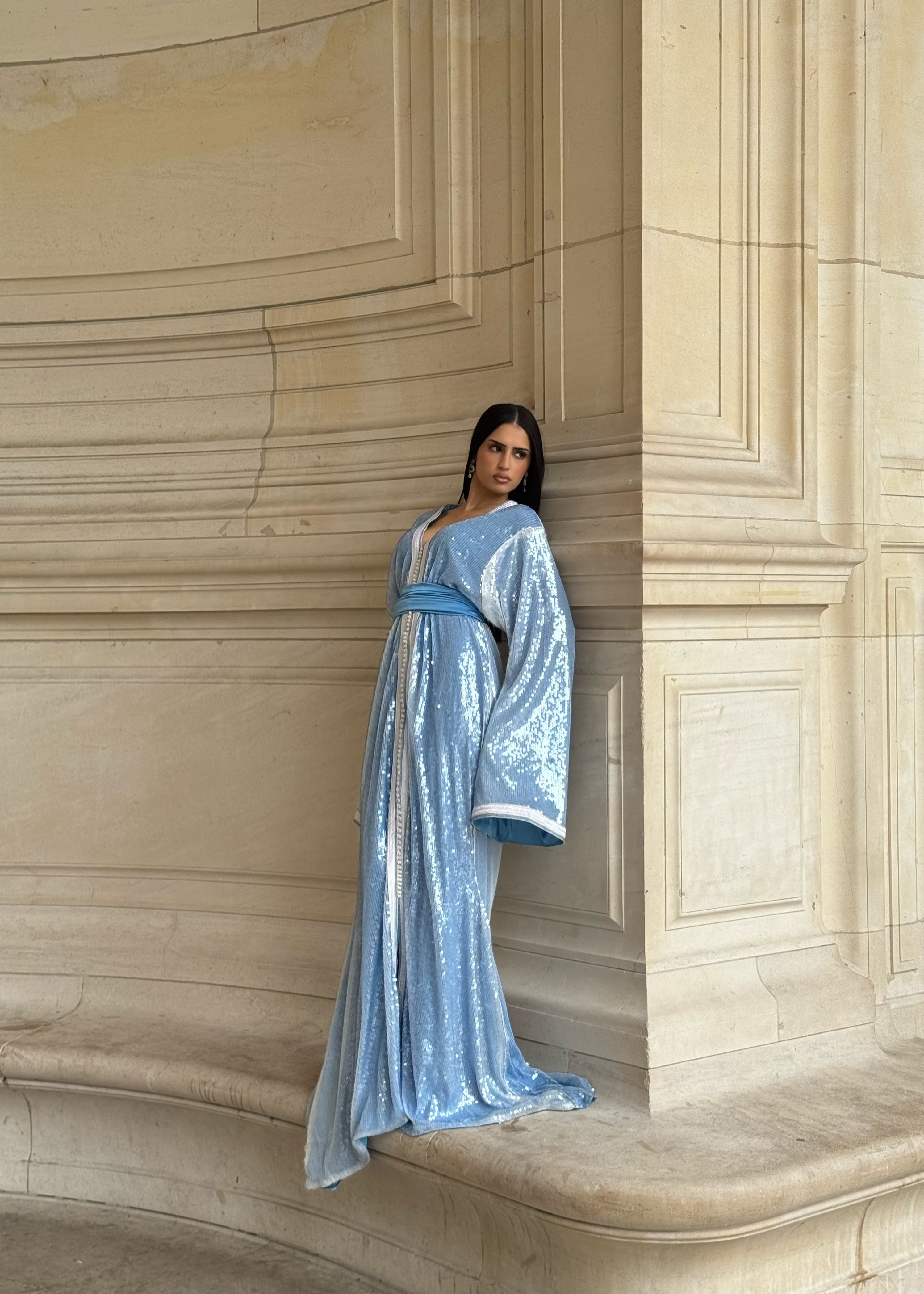
The takchita is a traditional Moroccan outfit made for ceremonies. It is built from two inseparable parts:
- The tahtiya — the under-dress, usually fluid and plain, that forms the base of the look.
- The dfina (also called fouqia or mansouria) — the over-dress, open at the front and the most ornate: it carries the embroidery, the trims and the shine of the fabric.
The two pieces are joined at the waist by the mdamma, a wide, structured belt, sometimes rigid and embroidered, that sculpts the silhouette. Closures and buttons are made in aâkad, the hand-braided button-loops typical of Moroccan dress. It is this assembly — layering, belt, hand-sewn finishes — that makes the takchita the dressiest of oriental outfits.
Takchita or kaftan: what is the difference?
The two are often confused, as they share the same ceremonial elegance. The distinction is simple: a kaftan is a one-piece robe, while a takchita is worn as two layered pieces (tahtiya and dfina) held by a belt. The takchita is, by nature, the more ceremonial of the two. To go further, read our comparison kaftan, djellaba, gandoura, takchita: what are the differences? and our guide which outfit for which occasion. For the kaftan itself, see what is a kaftan.

How much does a takchita cost?
The price of a takchita depends above all on the work it requires. Several factors come into play:
- The fabrics — brocade, silk or embroidered silk cloth do not hold the same value as a simple fabric.
- The embroidery and finishes — sfifa, aâkad and hand-laid embroidery represent long hours of atelier work.
- Made-to-measure — a piece cut to your measurements and personalised sits above ready-to-wear.
- The belt (mdamma) — an embroidered or beaded mdamma adds to the value of the ensemble.
A quality takchita, made in beautiful fabrics, is therefore an investment worthy of its status as a ceremonial outfit. For a wedding, many hesitate between buying and renting: we detail that choice in our article renting or buying your kaftan.
The fabrics and finishes of a takchita
It is the work of the fabric that gives the takchita its nobility. The most sought-after textiles:
- Brocade — relief and shine, ideal for a ceremonial dfina.
- Silk and chiffon — fluidity and lightness for an airy drape.
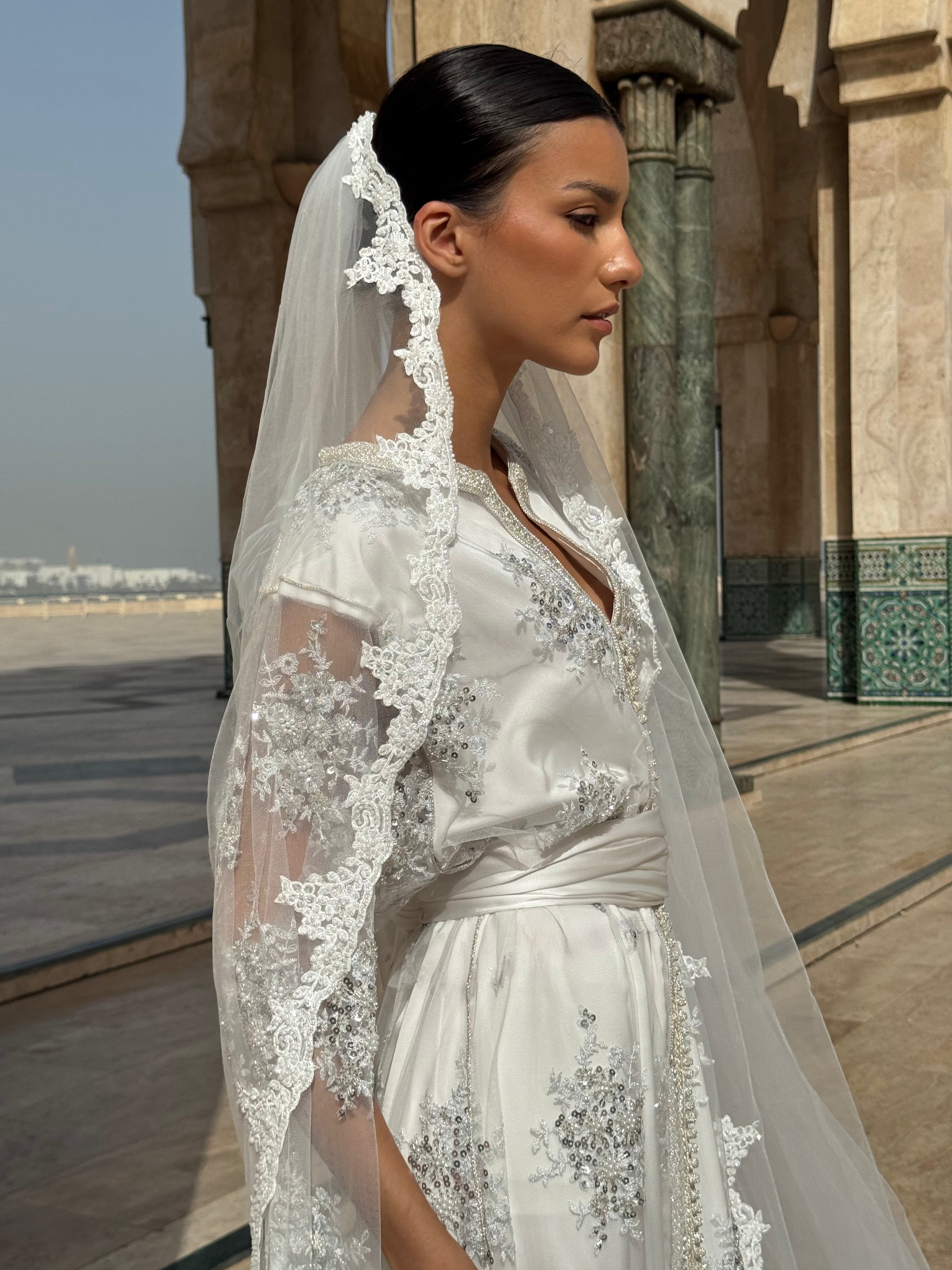
- Beaded lace — delicacy and light for bridal looks.
- Embroidered silk cloth — the base for embroidery and hand finishing.
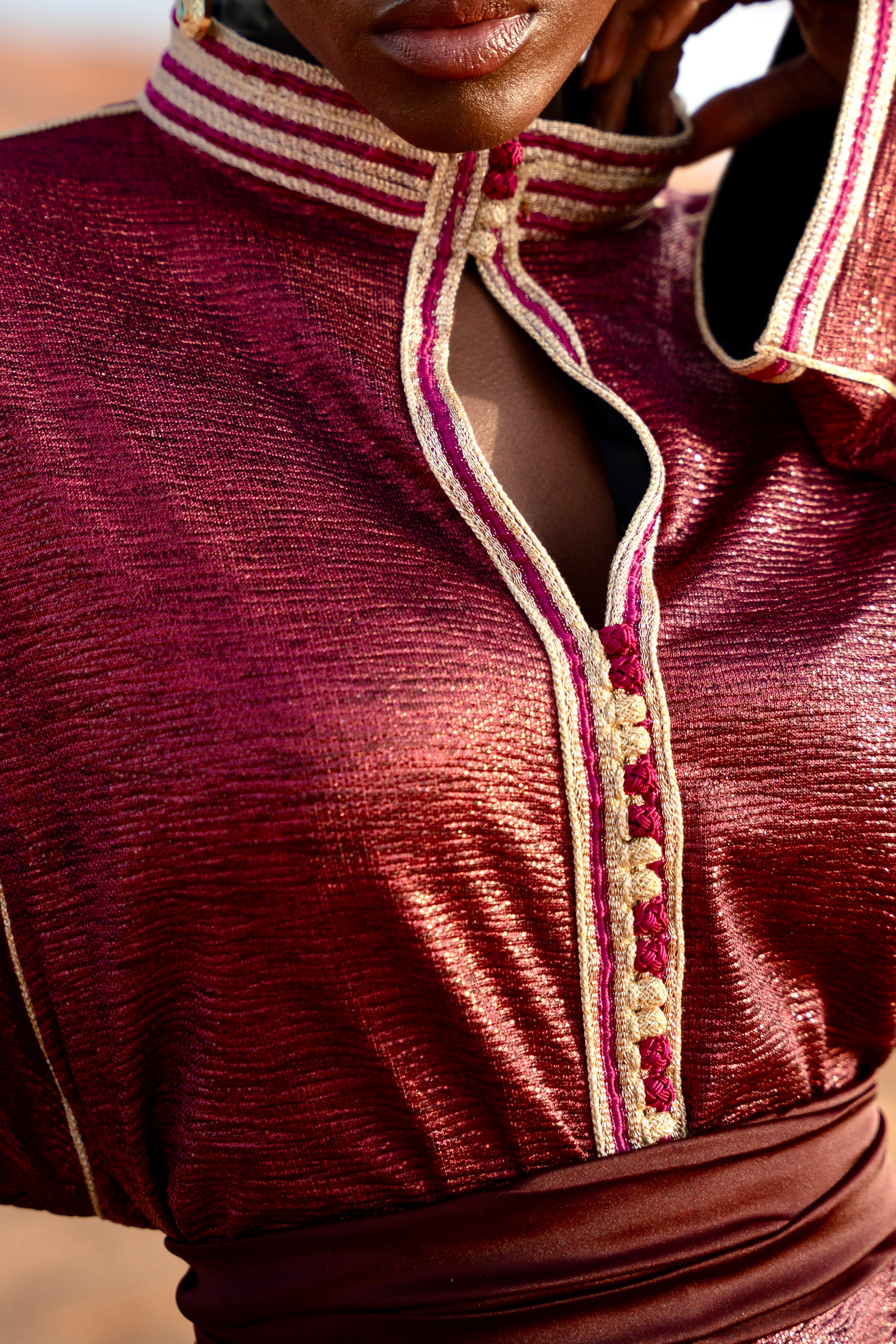
The detail that signals artisanal origin remains the sfifa — the hand-sewn braid that outlines collars, seams and hems — paired with aâkad buttons and the mdamma. To understand these finishes, discover the details that make a Moroccan garment.
When do you wear a takchita?
The takchita accompanies life's most important moments and is reserved for grand ceremonies:
- Weddings — for the bride and for guests alike. See how to choose your outfit for a wedding.
- The henna night — a festive moment where the takchita truly shines.
- Eid and family celebrations — to mark the occasion with elegance.
- Engagements and grand receptions — when the outfit needs to be at its dressiest.

How to choose your takchita
A few pointers to find the right piece:
- By occasion — an embroidered, belted takchita for a wedding or henna night; a more understated version for a family reception.
- By colour — pale, pearly tones for the bride; jewel shades and brocades for guests.
- By fabric — refer to our guide choosing by fabric.
- By body shape — the belt (mdamma) defines the waist and lengthens the silhouette; see which cut for your body shape.
You will find this ceremonial spirit in our bridal kaftans and takchitas collection, as well as across all SELHYAN kaftans.
Exceptional craftsmanship
The takchita is one of the most accomplished expressions of Moroccan craftsmanship. Each piece draws on several trades: the maâlem who cuts and assembles, the embroiderer who lays the motifs, the passementerie artisan who braids the sfifa and shapes the aâkad. It is these hours of work — invisible from afar, essential up close — that set a carefully made takchita apart from a mass-produced outfit. At SELHYAN, this heritage meets a contemporary standard: considered cuts, noble fabrics and lasting finishes.
FAQ — The takchita
What is the difference between a takchita and a kaftan?
A kaftan is a one-piece robe, while a takchita is made of two layered pieces — the tahtiya (under-dress) and the dfina (ornate over-dress) — held by a belt, the mdamma. The takchita is the more ceremonial of the two.
How many pieces make up a takchita?
At least two: the tahtiya worn underneath and the dfina worn on top, held at the waist by the mdamma. Some versions add embroidered accessories.
How much does a takchita cost?
It varies with the fabrics, the richness of the embroidery, whether it is made-to-measure and the work of the belt. A quality takchita in noble fabrics is an investment worthy of a ceremonial outfit.
What occasions is a takchita for?
For grand ceremonies: weddings (bride and guests), the henna night, engagements, Eid and family receptions.
Where can I buy a takchita?
The SELHYAN bridal kaftans and takchitas collection brings together pieces made in noble fabrics with artisanal finishing.