
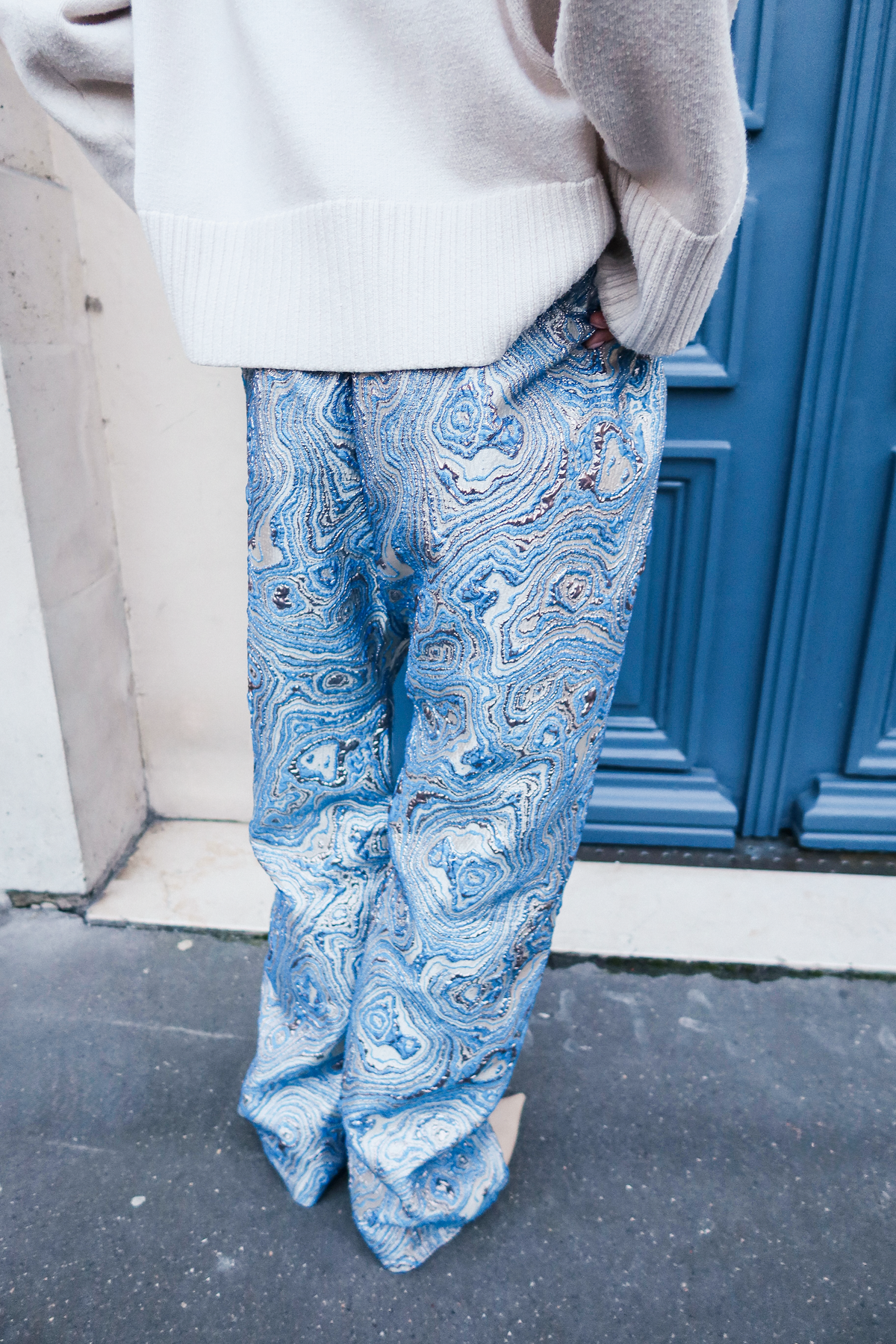
Moroccan Trousers: Styles and How to Wear Them
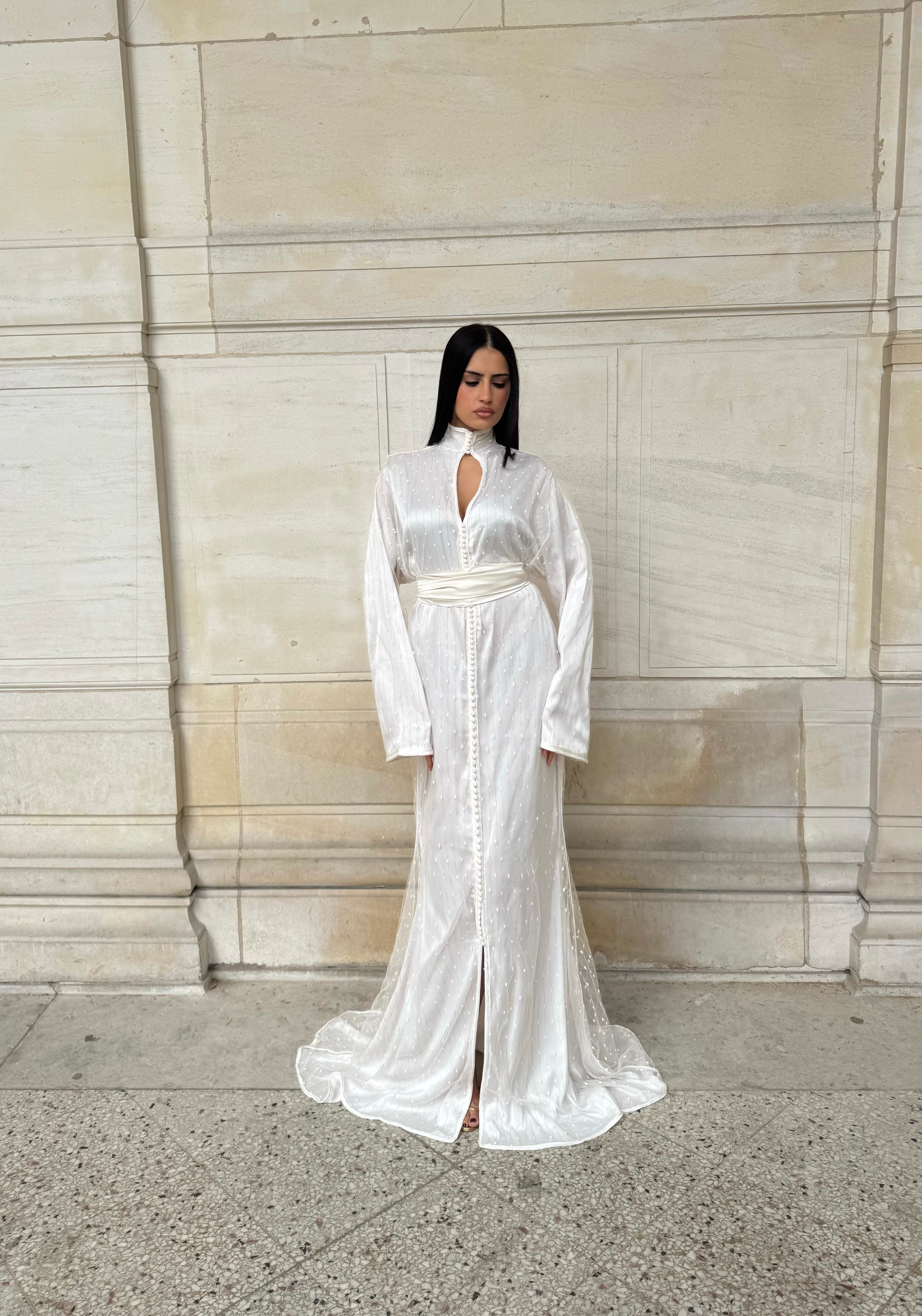
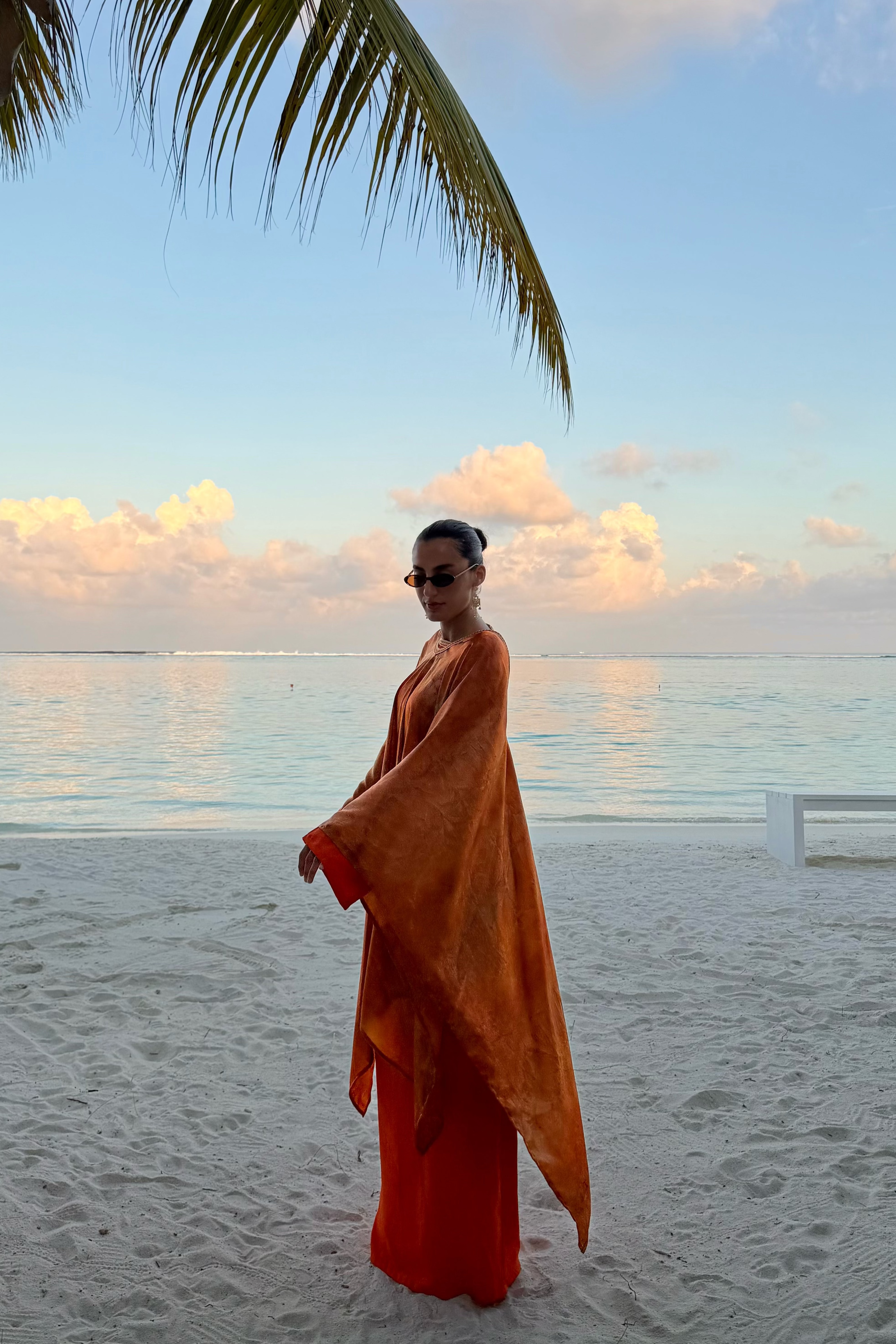
Moroccan trousers — worn as a coordinated oriental trouser set with a shirt, tunic, kimono or cape — bring together the comfort of a fluid cut and the elegance of a noble fabric. From the relaxed sarouel to the sharp straight-leg, often trimmed with hand-sewn sfifa braid, they are the refined, easy-to-wear alternative to the caftan for both everyday chic and evening dressing.
What are Moroccan (oriental) trousers?
Moroccan trousers are a family of cuts drawn from North African and Middle Eastern dress and reworked in a contemporary spirit: the sarouel (soft waist, roomy leg), the palazzo (wide and flowing), the straight-leg with a clean drape, and the more tapered silhouette. What unites them is freedom of movement — made to sit, dance and host — and the finishing work that signs each piece.
At Selhyan, trousers are rarely worn alone. They most often form a modern oriental set — Tunisian-collar shirt, tunic, kimono or jacket — coordinated in the same fabric for a lengthening, effortless, instantly dressed-up silhouette.
Sarouel, straight-leg or matching set: how to choose?
The elegant sarouel
Recognisable by its comfortable waist and volume, the sarouel gives an airy drape. It flatters most body shapes and pairs with a long tunic or a tucked-in shirt to define the waist.
The straight-leg trouser
More structured, the pleated straight-leg draws an elegant vertical line. In mlifa (wool satin) or jacquard, it makes a set that works from the office to a reception.
The matching trouser set
The set — trousers plus a coordinated top — is the centrepiece of the Selhyan trouser collection. It delivers a complete, cohesive, effortless outfit when you want to be fully dressed in a single piece.

Which fabrics make a quality pair of oriental trousers?
Fabric is what separates an ordinary trouser from an exceptional piece. The favourites:
- Mlifa (wool satin): a heavy, matte drape that holds structure — ideal for a straight-leg that keeps its line.
- Silk crepe and chiffon: fluidity and lightness for a sarouel or palazzo that moves beautifully.
- Brocaded jacquard: subtle relief and shine for festive dressing.
- Embroidered silk cloth: the base for Kabyle embroidery and hand finishing.
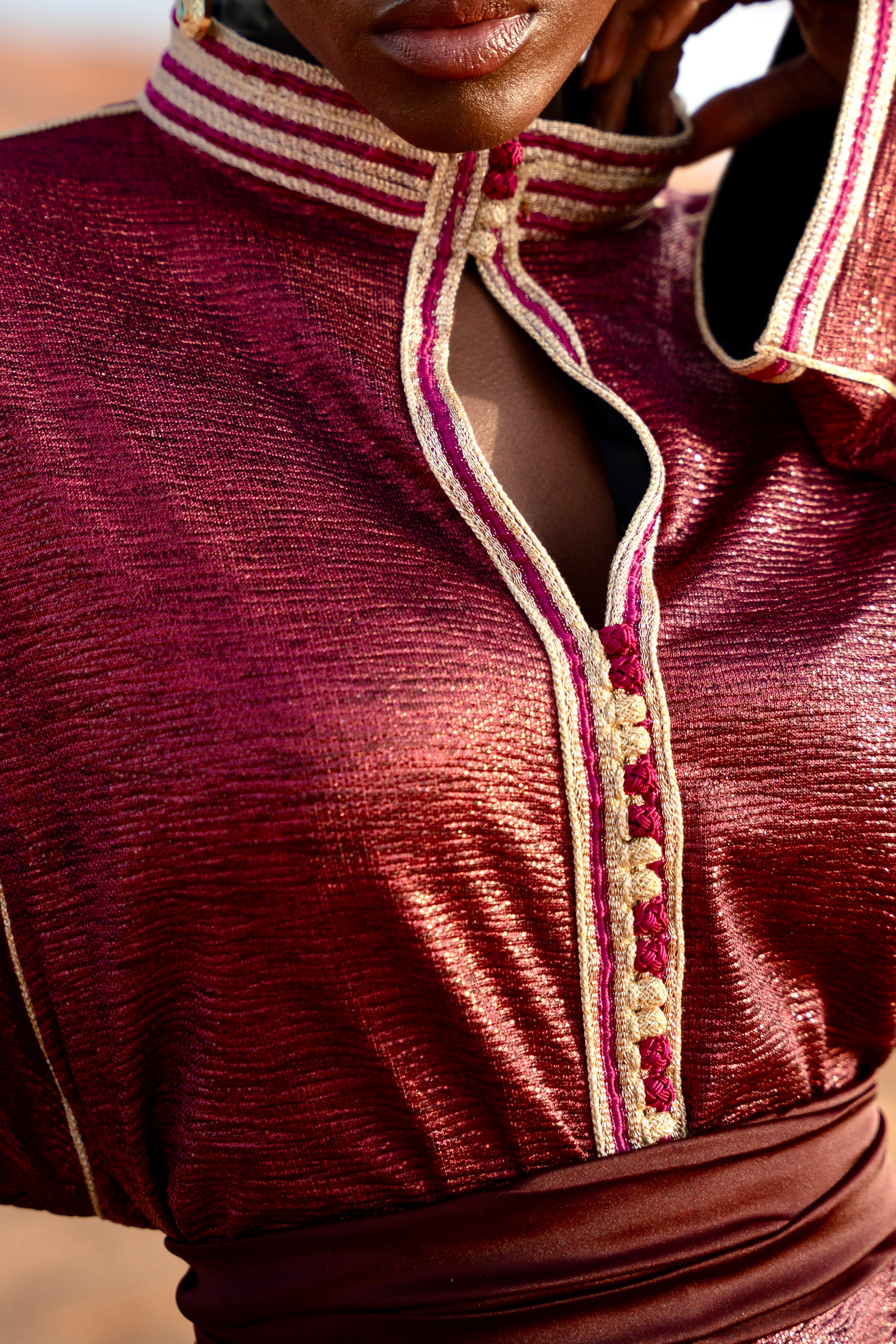
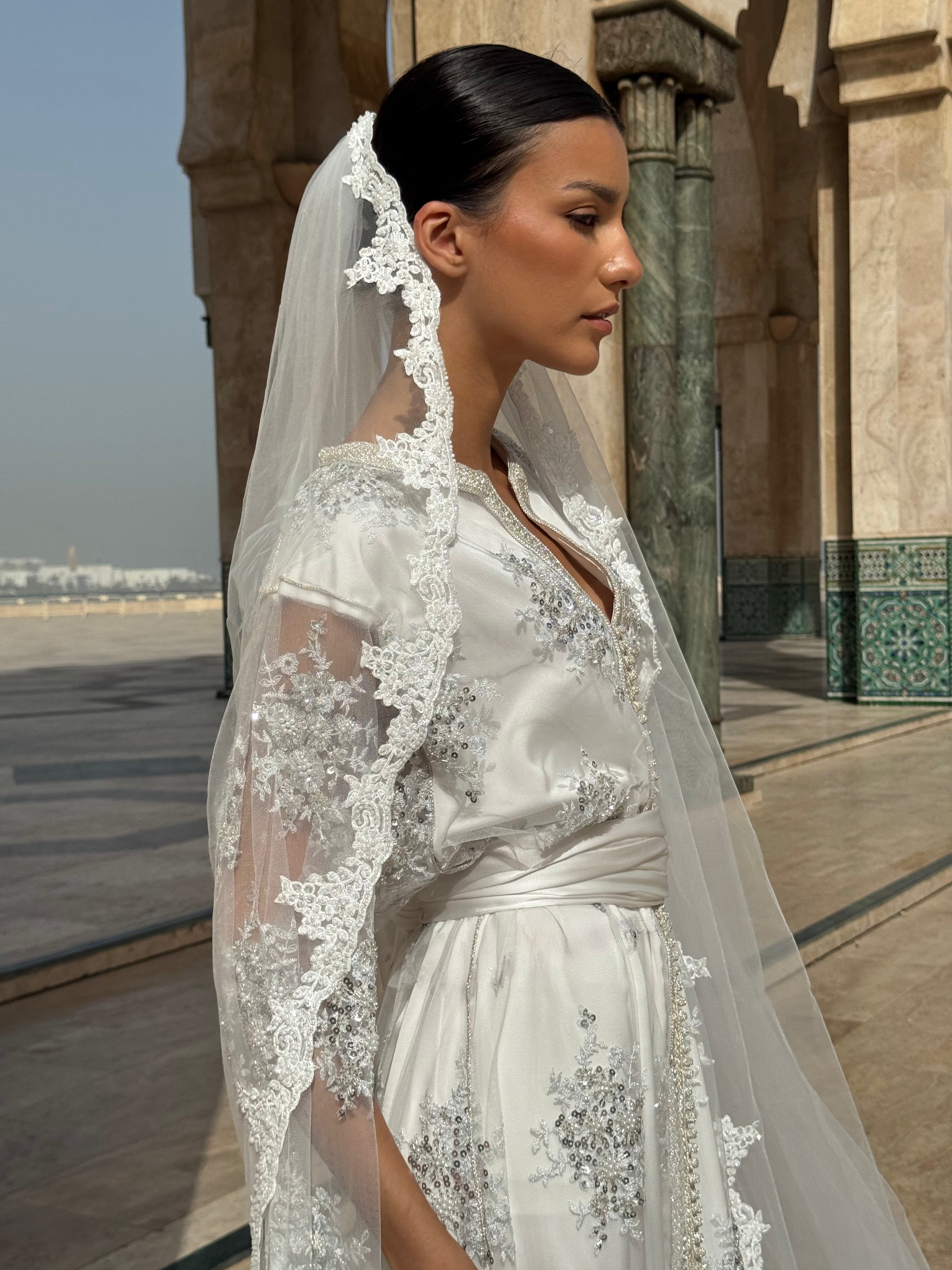
The detail that signals artisanal origin is the sfifa — a braid sewn by hand along seams, collars and hems. To understand these finishes, read our piece on the details that make a Moroccan garment.
How to wear oriental trousers by occasion
Everyday
A mlifa set in quiet tones (taupe, navy, off-white) with flat sandals or mules makes a polished daytime look — an idea that extends our guide to everyday jackets and sfifa sets.
For an evening or celebration
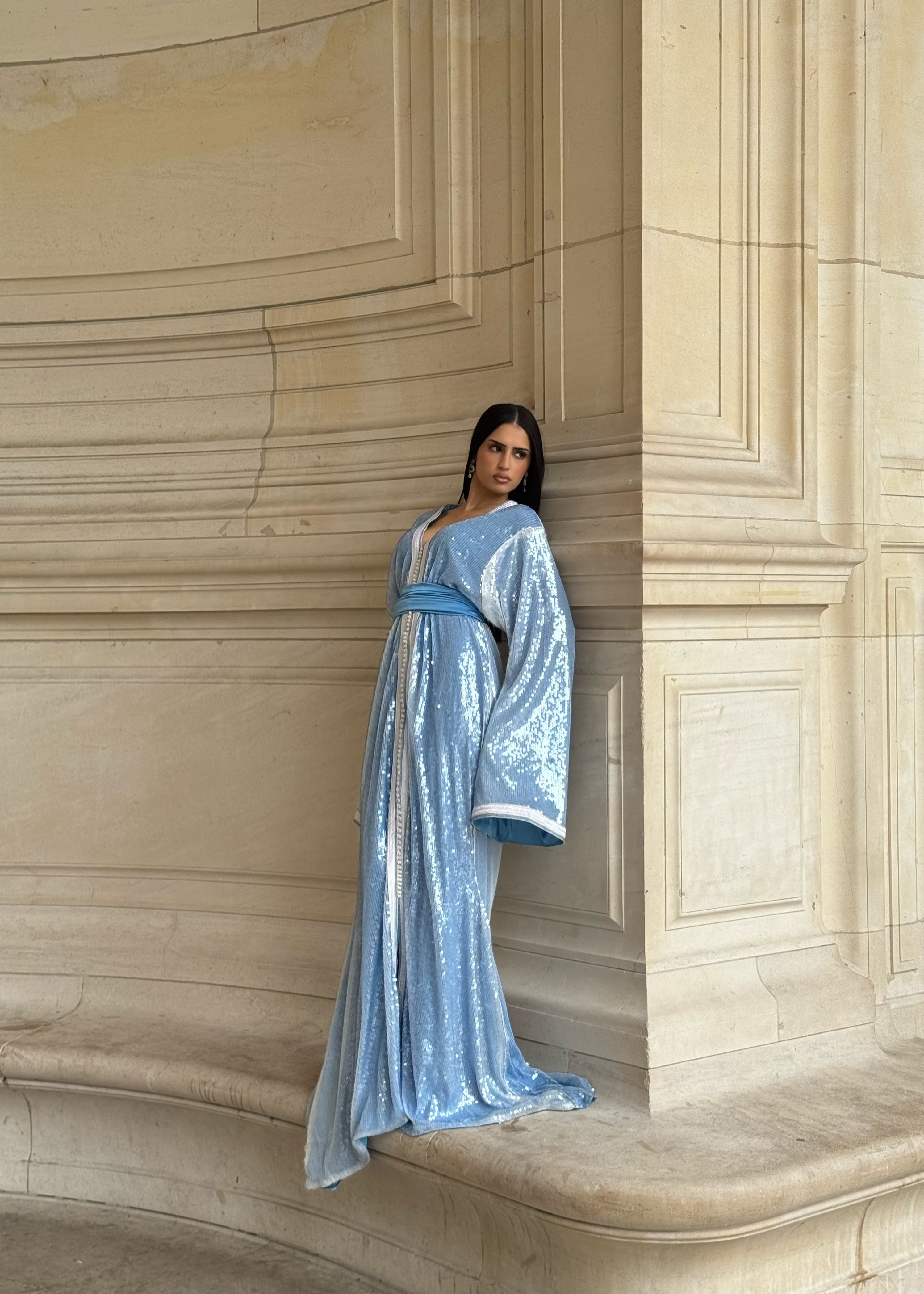
Choose a shimmering jacquard or a silk ombré, add heels and a few gold pieces. The trouser set becomes a genuine reception outfit — freer to wear than a long gown.
For a family event
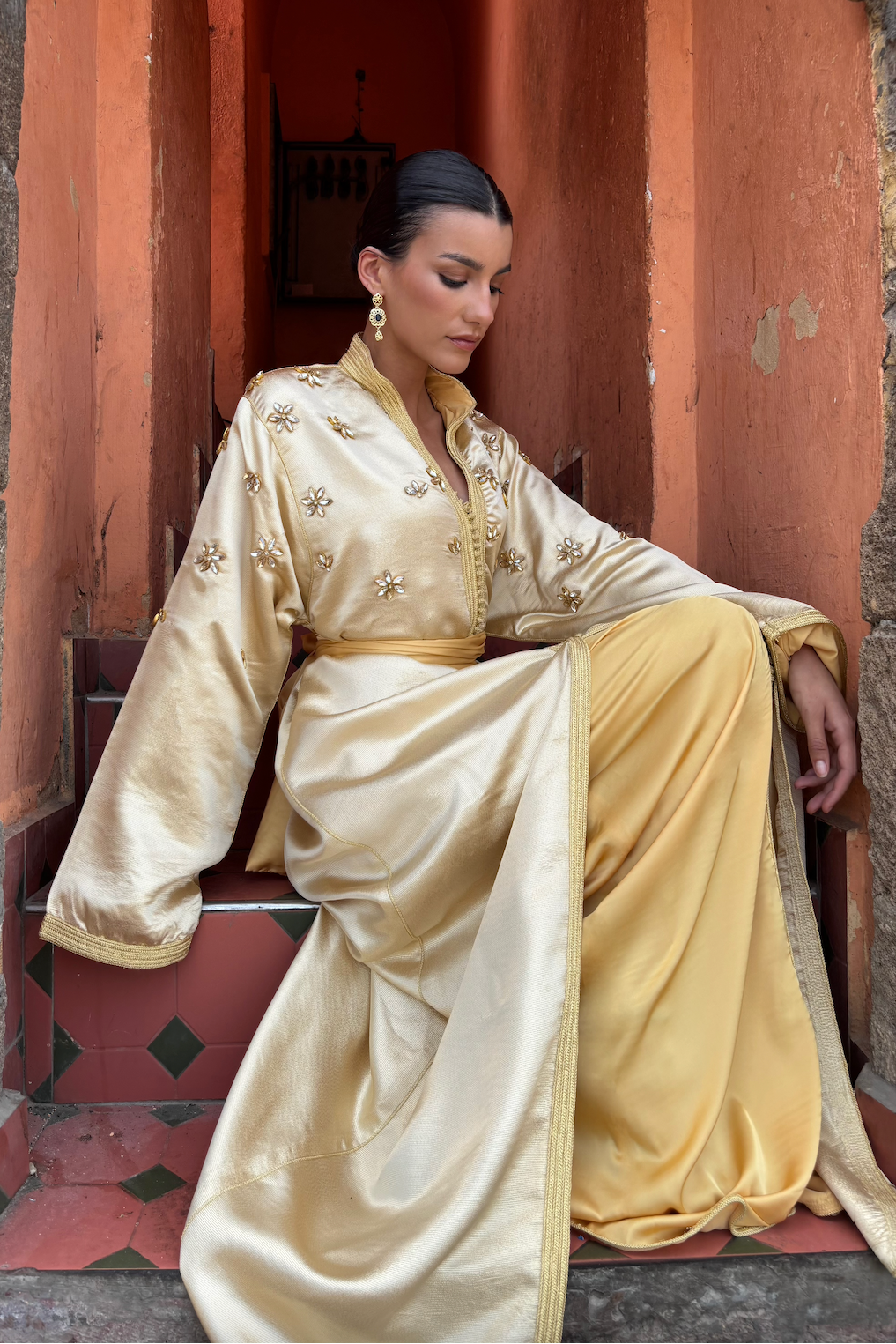
Oriental trousers belong to the same festive wardrobe as the modernised caftan: see how to wear the modern caftan every day to vary your silhouettes.

Which cut suits your body shape?
A-line shapes benefit from balancing a wide palazzo with a fitted top. H shapes love the straight-leg that lengthens the line. The soft-waisted sarouel suits the greatest number and adjusts easily. In every case, the right hem length — grazing the ankle, or brushing the floor with a heel — is the secret to a clean look.
An inherited, reinvented craft
The wide trouser has belonged to the Mediterranean and North African wardrobe for centuries, valued for its comfort in warm climates and its freedom of movement. Contemporary design keeps that spirit while refining the cuts — cleaner waistbands, considered hems, careful linings. This dialogue between shared heritage and modernity sits at the heart of today's oriental fashion.
The worth of a set also shows in its finishing: even seams, passementerie buttons, sfifa braid laid by hand. These details — invisible from afar, essential up close — are what set a carefully made piece apart from mass production.
FAQ — Moroccan / oriental trousers
What is the difference between a sarouel and oriental trousers?
The sarouel is one type of oriental trouser, defined by its soft waist and roomy leg. "Oriental trousers" is the umbrella term covering the sarouel, palazzo, straight-leg and tapered cuts.
Can you wear an oriental trouser set to a wedding?
Yes. A set in jacquard, silk or trimmed with sfifa makes an elegant, comfortable guest outfit — often more practical than a long gown for dancing and moving.
How do you care for silk or mlifa trousers?
Prefer dry cleaning or a gentle cold wash, dry flat away from light, and iron at low temperature on the reverse to protect the fabric's sheen and the hand-sewn finishes.
Where can you find modern oriental trousers?
The Selhyan trousers and sets collection brings together pieces made in noble fabrics with artisanal finishing.