
The Details That Make a Moroccan Piece: Sfifa, Aâkad, Mdamma and Embroidery
What sets a Moroccan piece apart from a simple long dress is its details. Behind every kaftan lies a vocabulary of finishing techniques, inherited from centuries-old craftsmanship. Here's a quick overview to help you better understand — and better choose — your pieces.
Sfifa: the signature trim
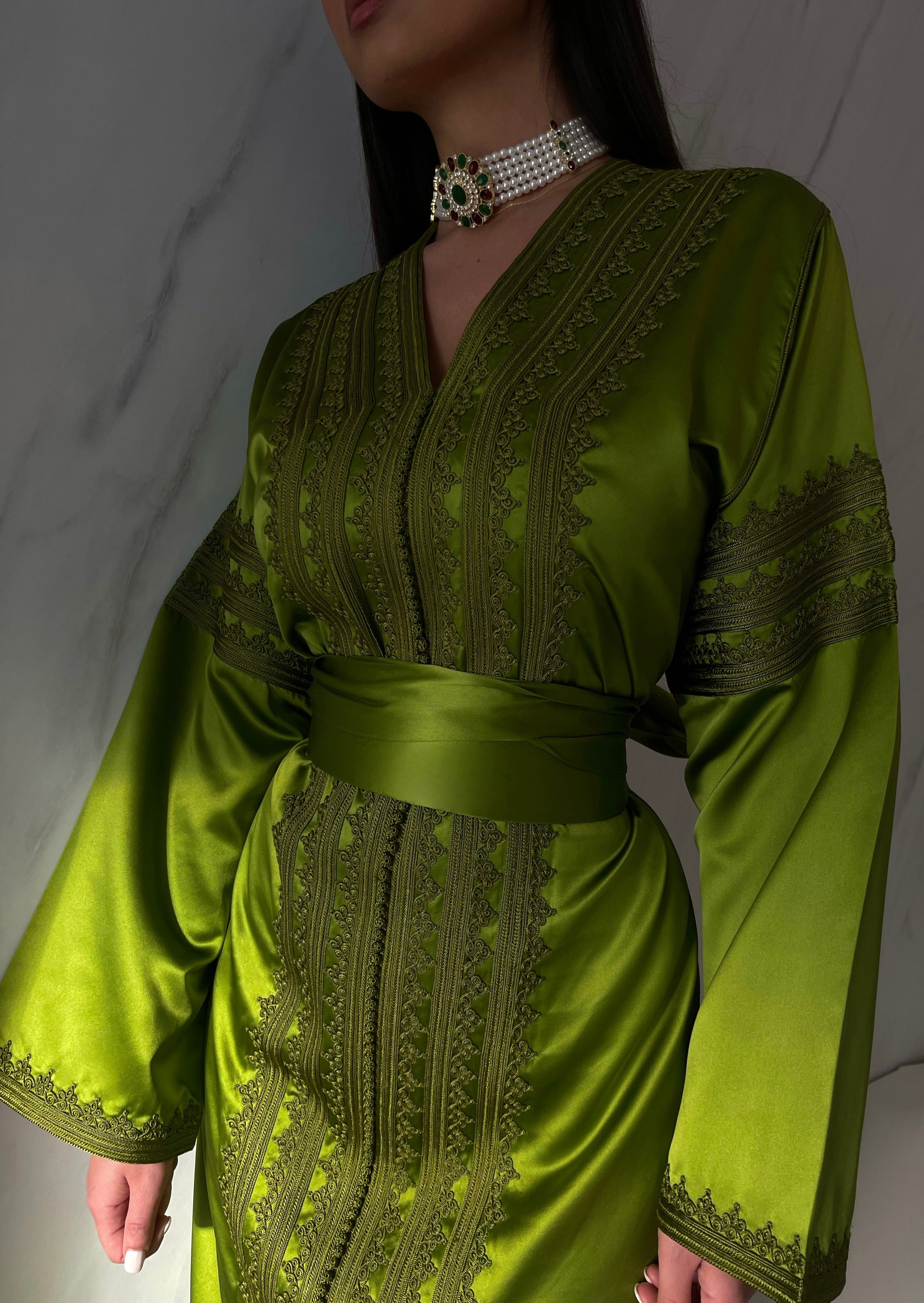
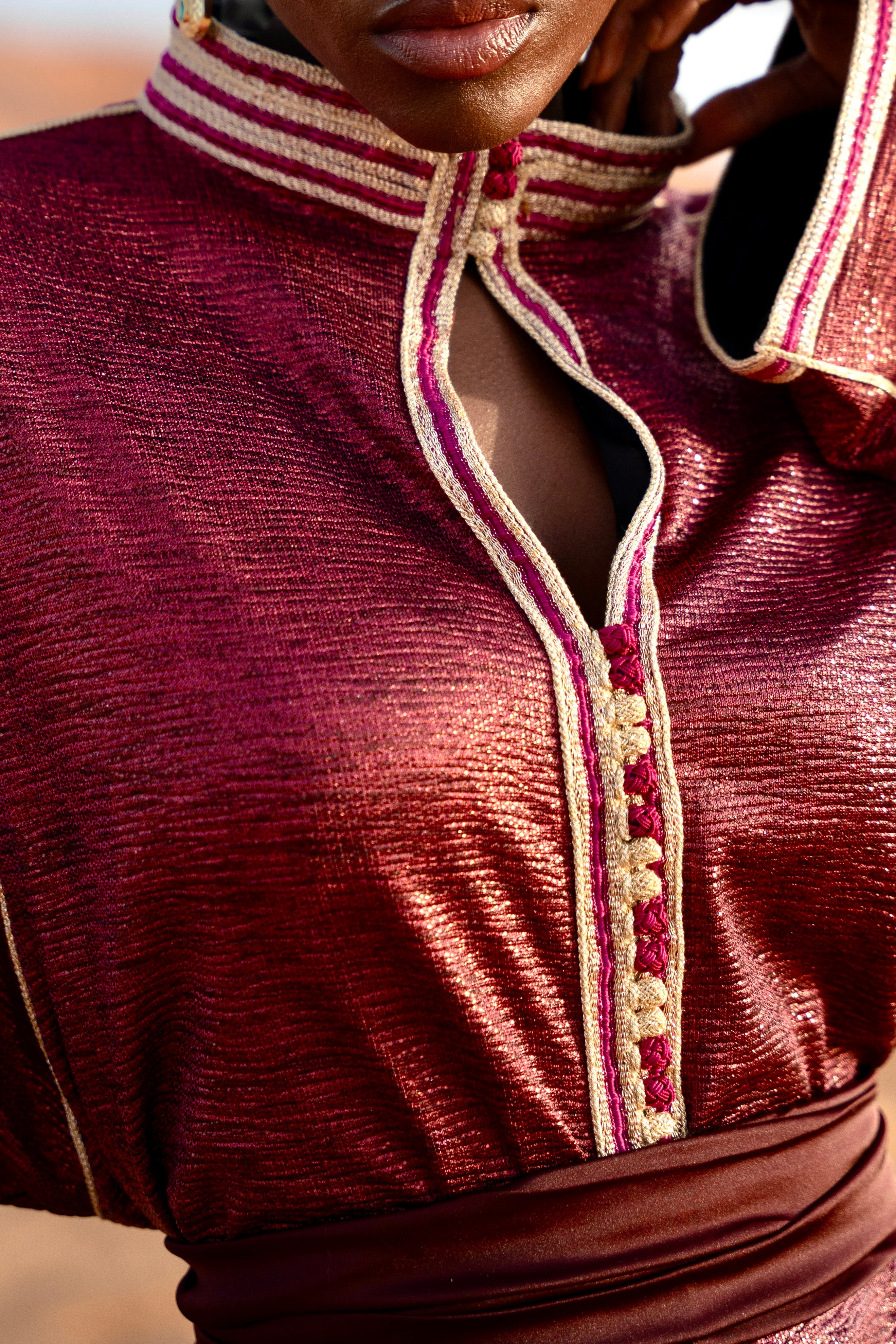
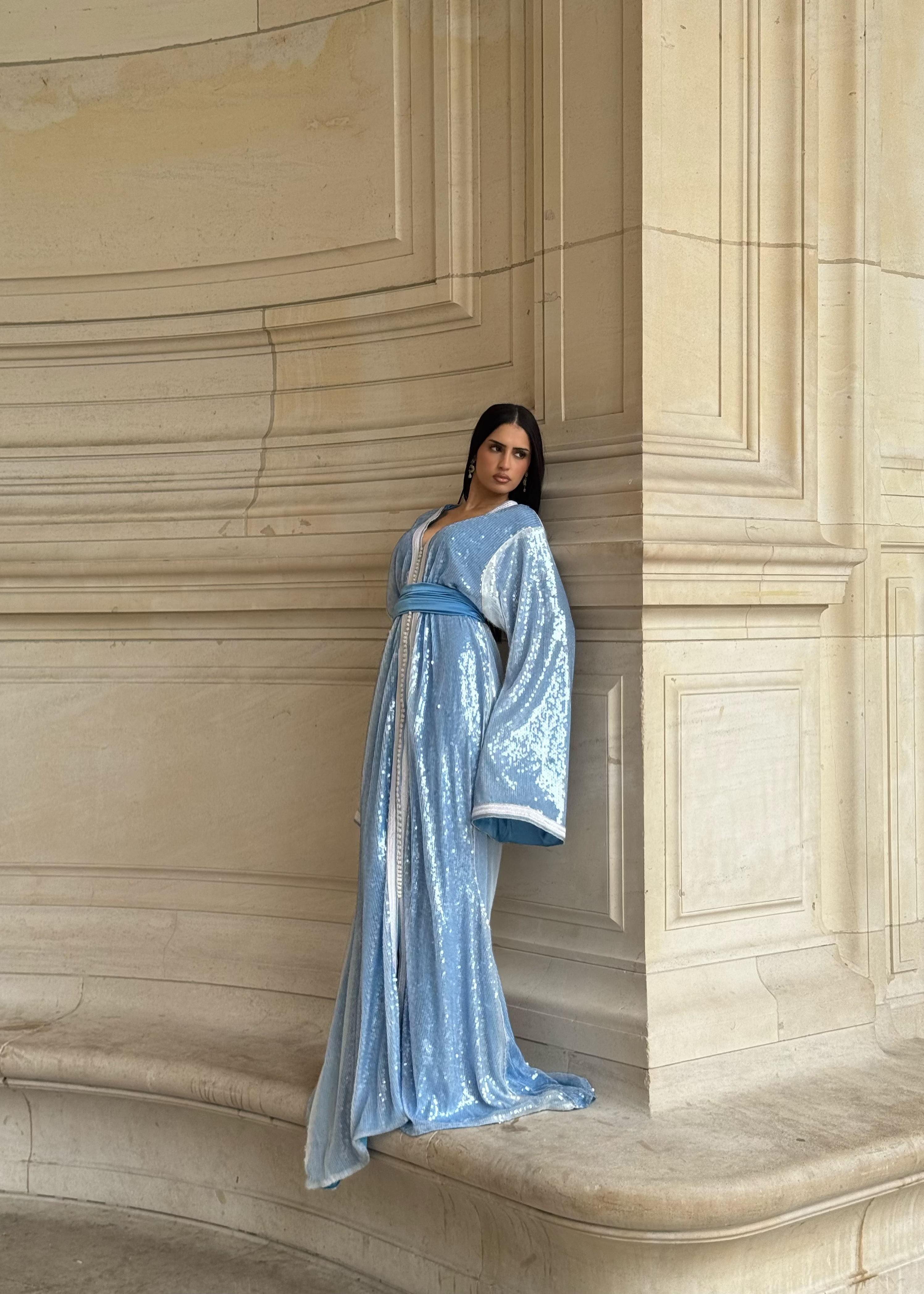
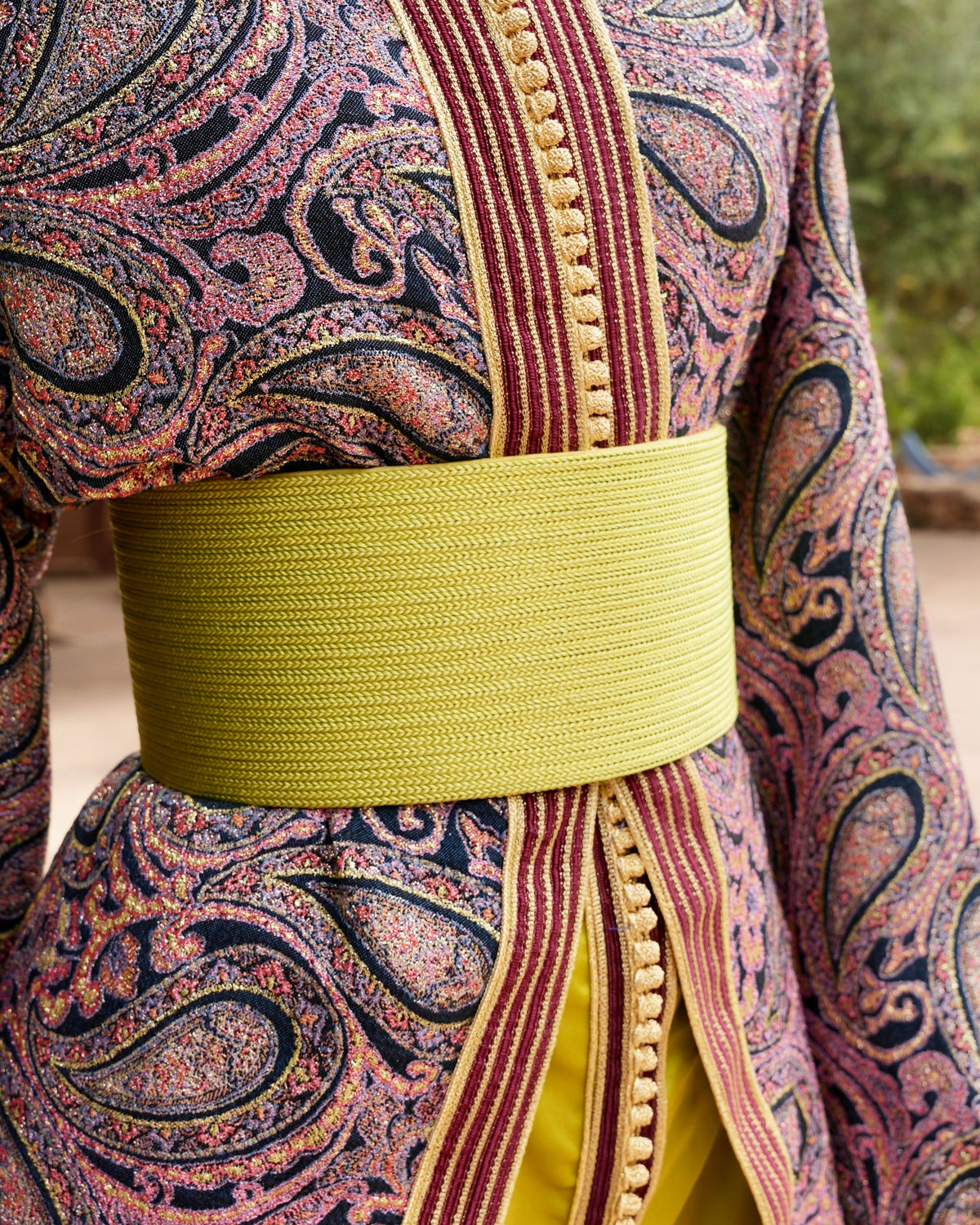
Sfifa is a braided passementerie trim, sewn along the edges, openings, and seams of the garment. It is what gives the kaftan its instantly recognizable silhouette. Be careful not to confuse it with embroidery: sfifa is an applied trim, while embroidery is stitched directly into the fabric with thread.
The sfifa — the woven braid trim sewn along the edges — is an excellent indicator. On a quality piece, it is even, well aligned and securely sewn, with no loose threads. A sloppy sfifa reveals rushed manufacturing.
Aâkad: the traditional buttons
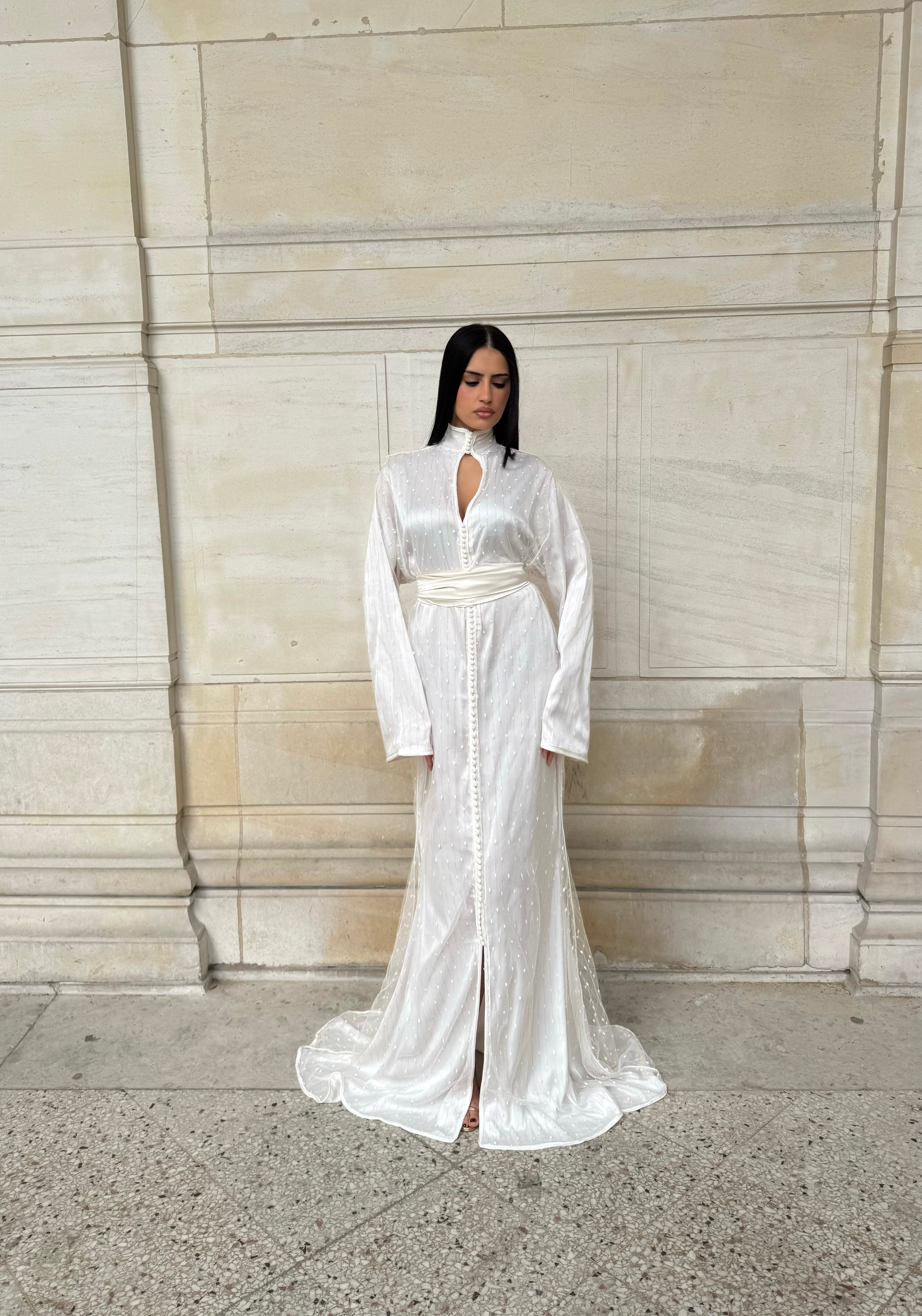
Aâkad are the small braided buttons, often made of silk thread or passementerie, that close the kaftan or embellish its openings. Handmade, they work with fine loops and are, on their own, a decorative element in their own right.
The hand-braided buttons (aâkad) and their loops should be sturdy and well finished. This is a detail where craftsmanship shows immediately.
Mdamma: the belt that structures
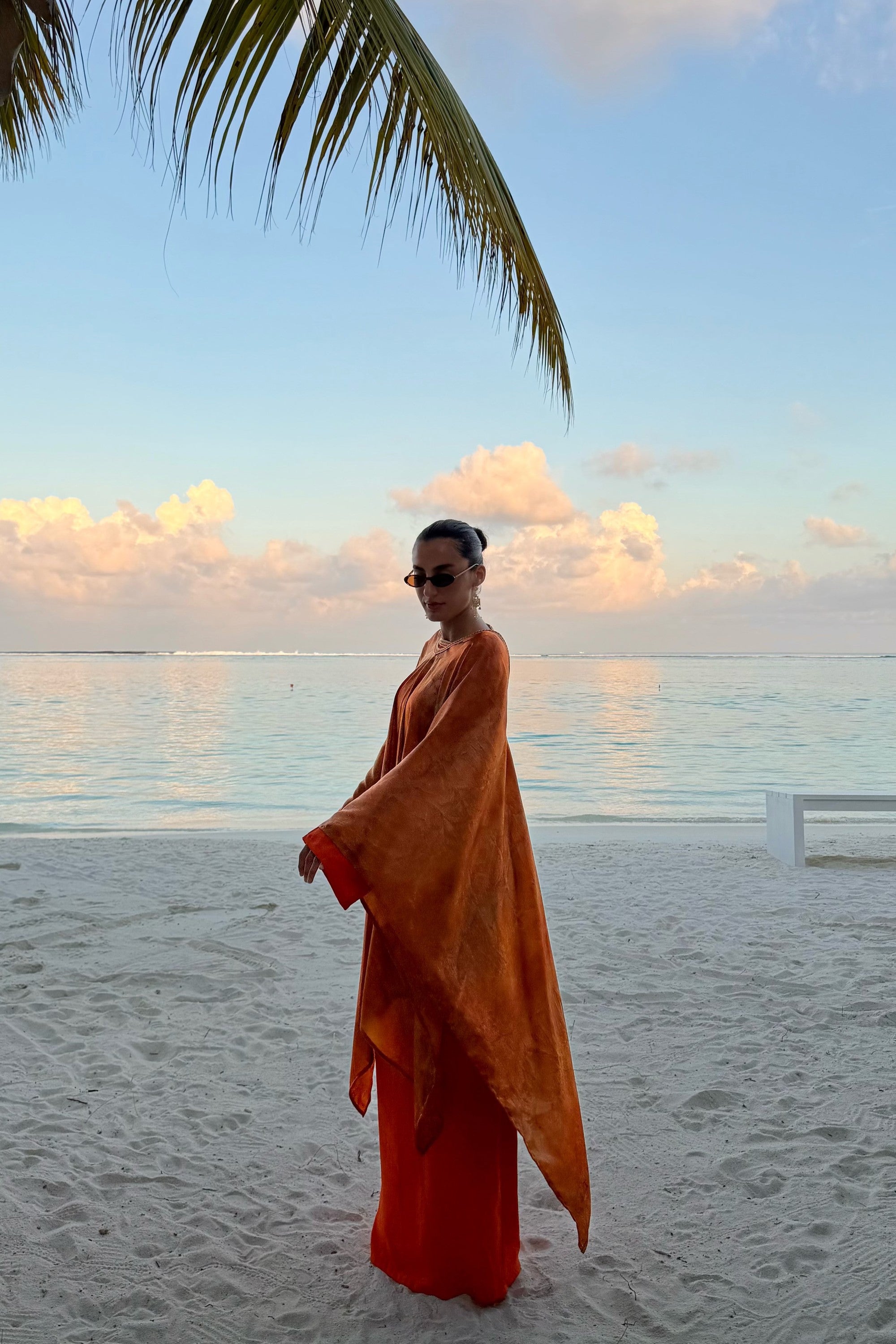
The mdamma is the belt of the kaftan and the takchita. Often wide, embroidered, or rigid, it marks the waist and transforms the silhouette. On the takchita, it is essential: it holds the whole outfit together and gives it its ceremonial look. A beautiful mdamma alone can elevate a simple piece.
Embroidery and thread
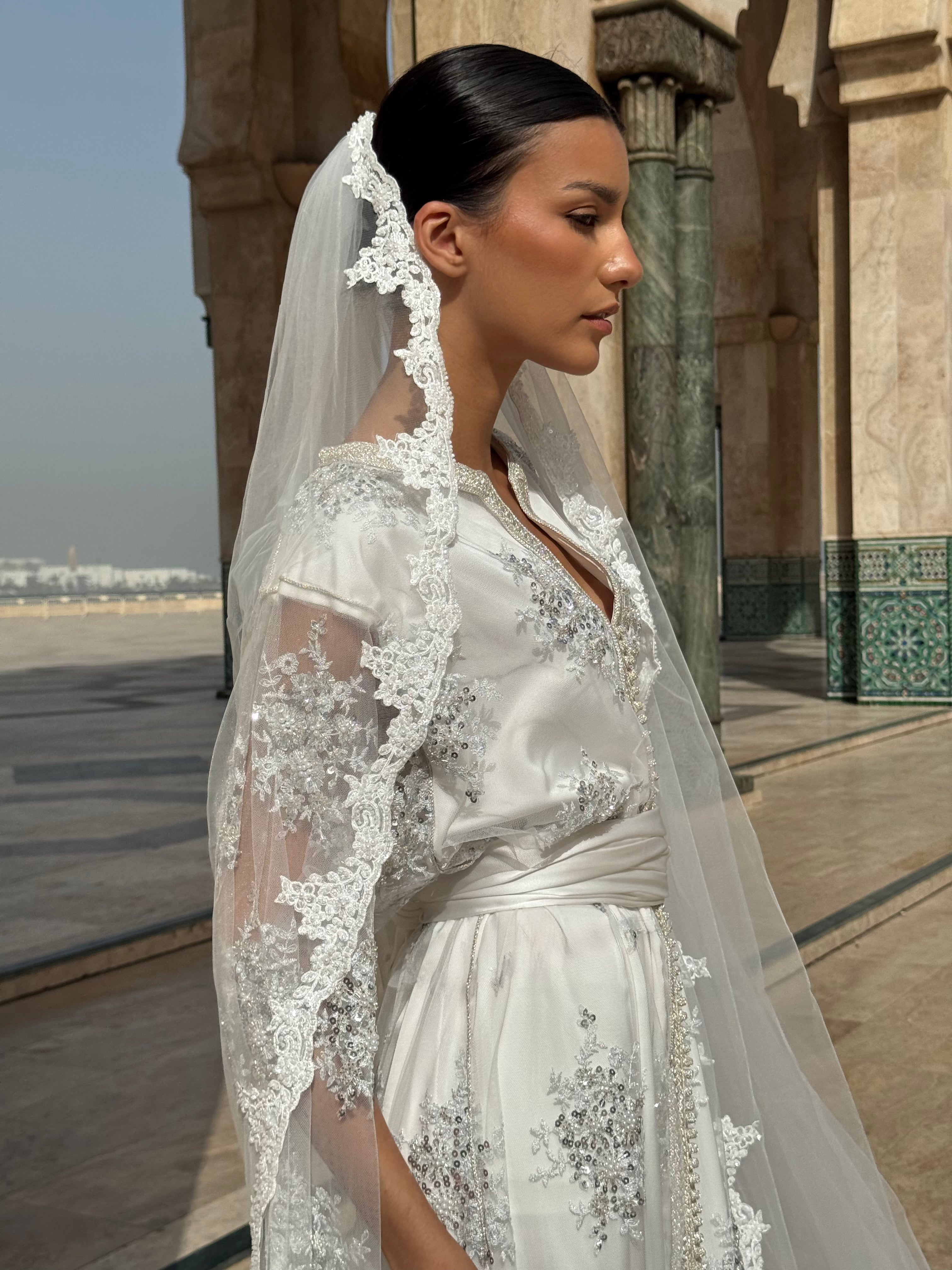
Gold-thread embroidery (real or imitation gold thread), floral motifs, arabesques: embroidery brings texture and richness. It can be discreet, a simple accent, or fully covering for the most elaborate ceremonial pieces.
Look closely at the embroidery: stitches should be tight and even, with no gaps or loose threads. Dense, clean embroidery reflects genuine craftsmanship, unlike printed or glued-on motifs.
Beads, sequins and fabrics
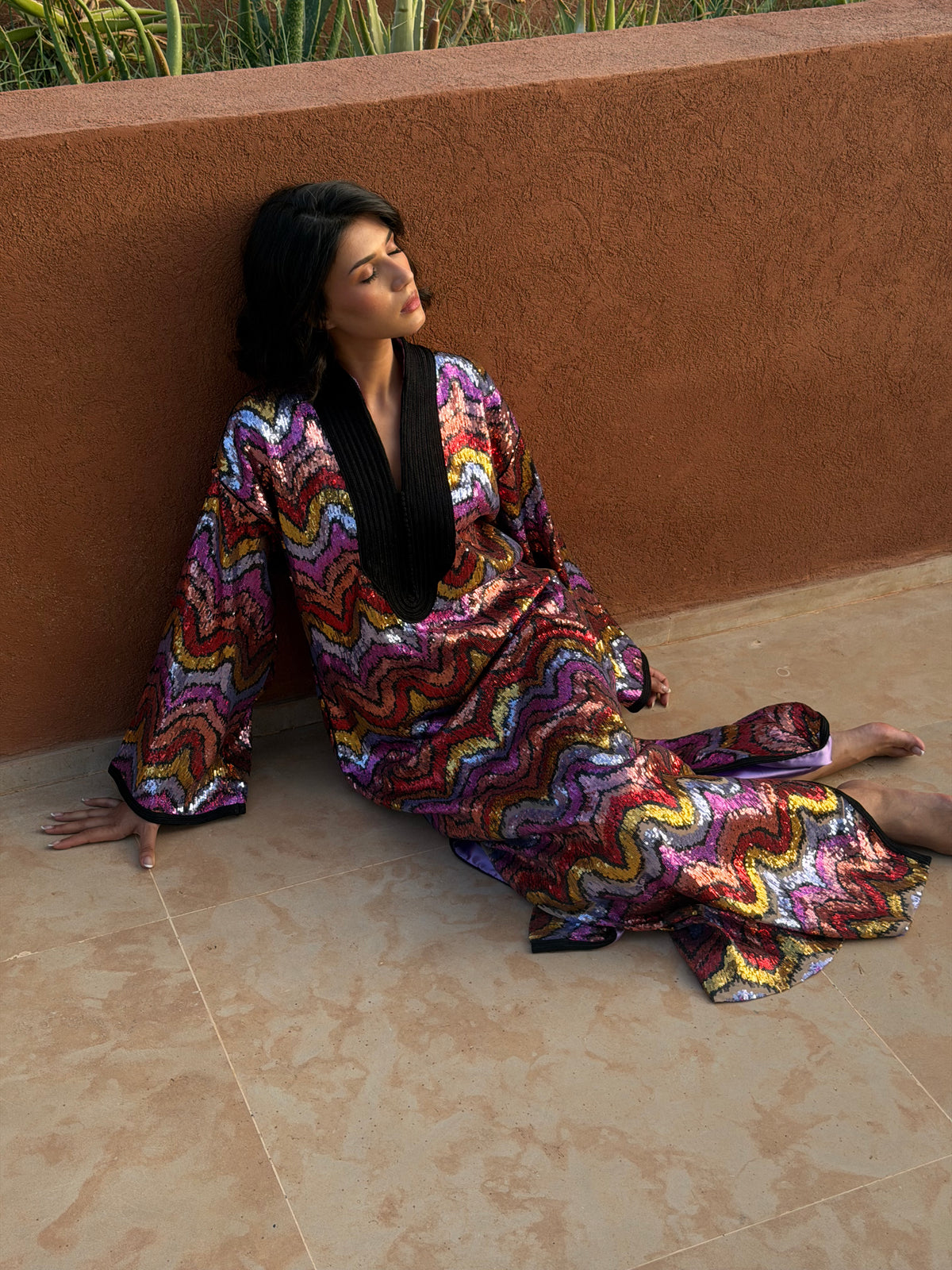
Beyond the finishing touches, the fabric itself tells a story: flowing silk chiffon, light organza, rigid jacquard-woven brocade, lamé with metallic sheen. Beads (small sewn-on balls) and sequins (shiny discs) add the shimmer that makes a piece sparkle in the evening.
A quality fabric has a beautiful drape and a pleasant feel. Be wary of fabrics that are too stiff or artificially shiny. Authentic silk, organza and brocade are recognizable by their hand and their sheen.
Recognizing quality
A beautiful Moroccan piece is judged by the regularity of its sfifa, the finish of its aâkad, the neatness of its embroidery, and the quality of its lining. These details, invisible at first glance, make all the difference between a mass-produced piece and a handcrafted garment.
Two further checks complete the inspection of a piece:
The lining and seams
Turn the piece inside out: a good lining and clean seams, with no hanging threads, are the sign of careful construction. Inside finishes often tell you more than the outside.
The overall drape
A good kaftan hangs well, without unflattering creases or distortion. When tried on, it should follow the silhouette fluidly.
Want to see these finishes up close? Discover our selection of kaftans or visit us in our Paris boutique.
Frequently asked questions
What is the difference between sfifa and embroidery?
Sfifa is a braided passementerie trim applied along the edges and openings of a garment. Embroidery, on the other hand, is stitched with thread directly into the fabric.
What are aâkad?
They are the small braided buttons, often in silk thread or passementerie, that fasten the kaftan or decorate its openings. Made by hand, they work with fine loops.
What is the mdamma for?
The mdamma is the belt of the kaftan and the takchita. Often wide, embroidered or stiff, it defines the waist and structures the silhouette; on the takchita, it holds the whole outfit together.
How do you recognise a quality Moroccan piece?
Look at how even the sfifa is, the finish of the aâkad, the neatness of the embroidery, the lining and the inside seams.