


How to Care for Your Kaftan
How to Care for Your Kaftan
A kaftan is a precious garment, often made from delicate fabrics and adorned with intricate details. If cared for properly, it will last for years and remain a staple for many occasions without losing its luster. Here are our tips for caring for your kaftan based on its fabric and finish.
First and foremost: read the label
Each kaftan has its own care requirements depending on its fabric composition. The care label is your best guide. When in doubt, always opt for the gentlest approach: it’s better to clean it gently than to wash it too harshly, which could damage the garment.
Delicate fabrics: silk and satin
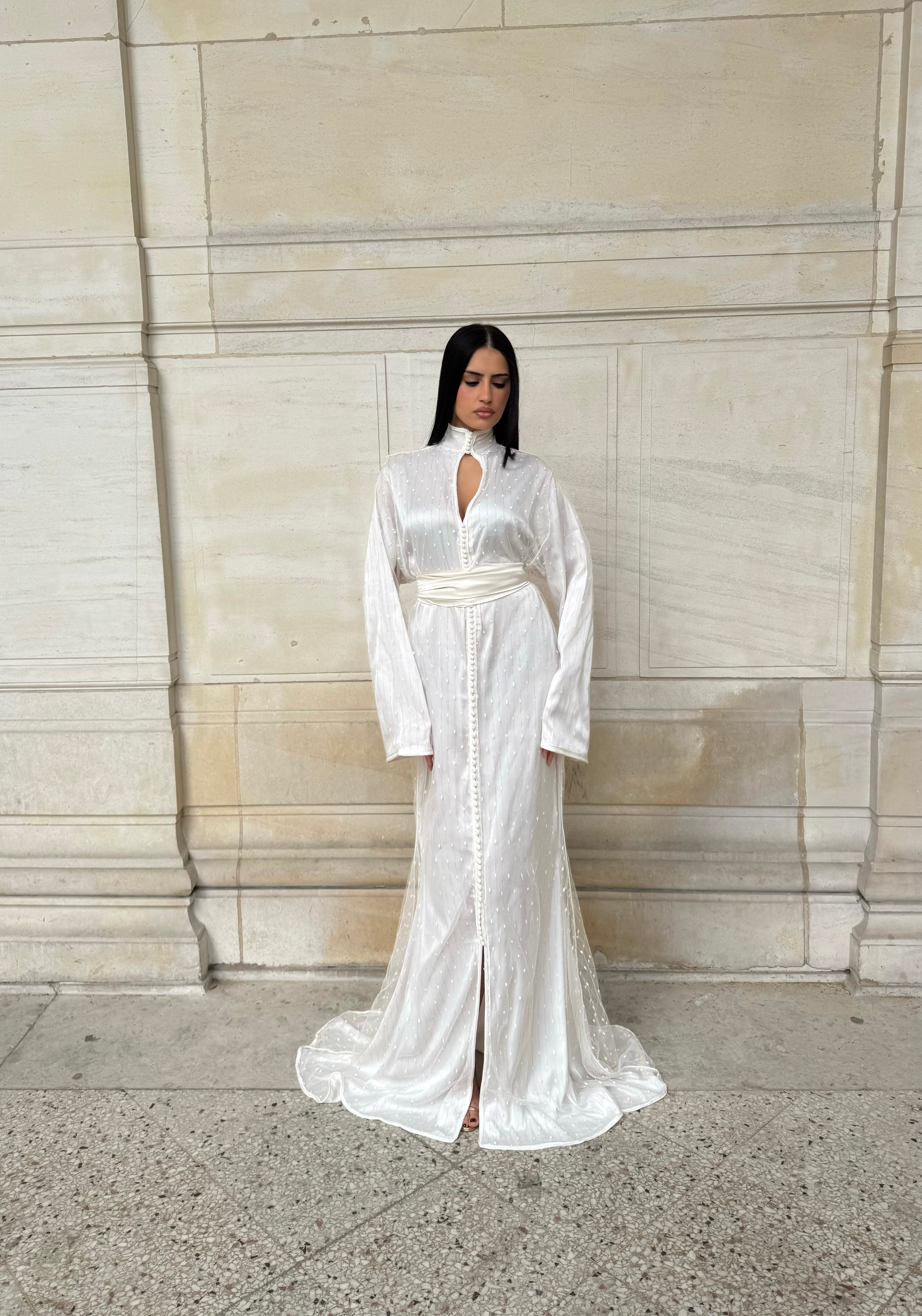
Silk and satin require special care. Dry cleaning is often the safest option for formal wear. If you hand-wash, use cold water and a mild detergent; do not rub or wring out the fabric. Dry flat, away from direct sunlight, which can cause colors to fade.
Lace and delicate embroidery
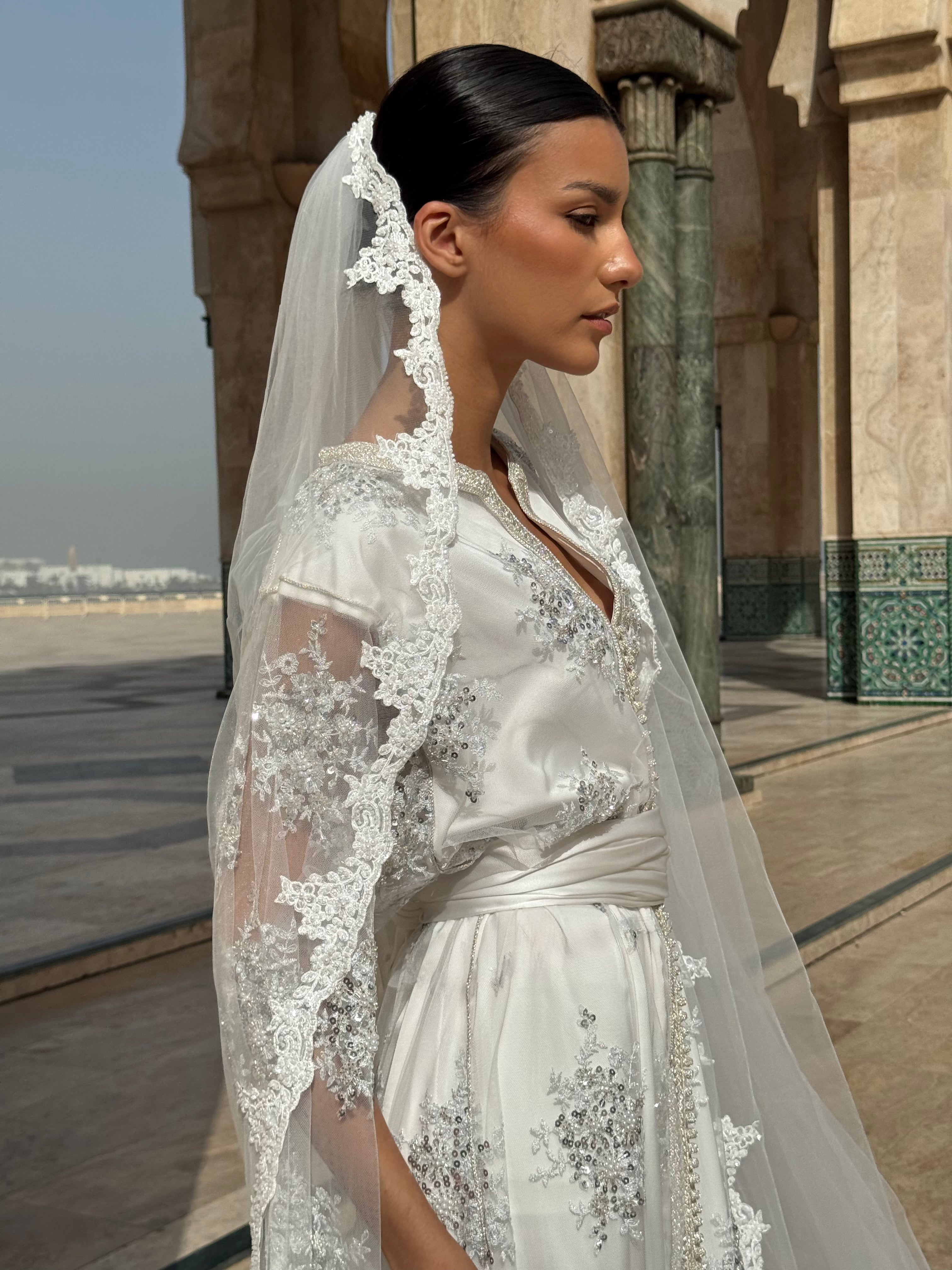
Lace or embroidered kaftans require gentle handling. Avoid anything that might snag the threads. When hand-washing, place the garment in a laundry net. Never wring out the fabric; instead, gently press it to remove excess water.
Beads, sequins, and glittery pieces
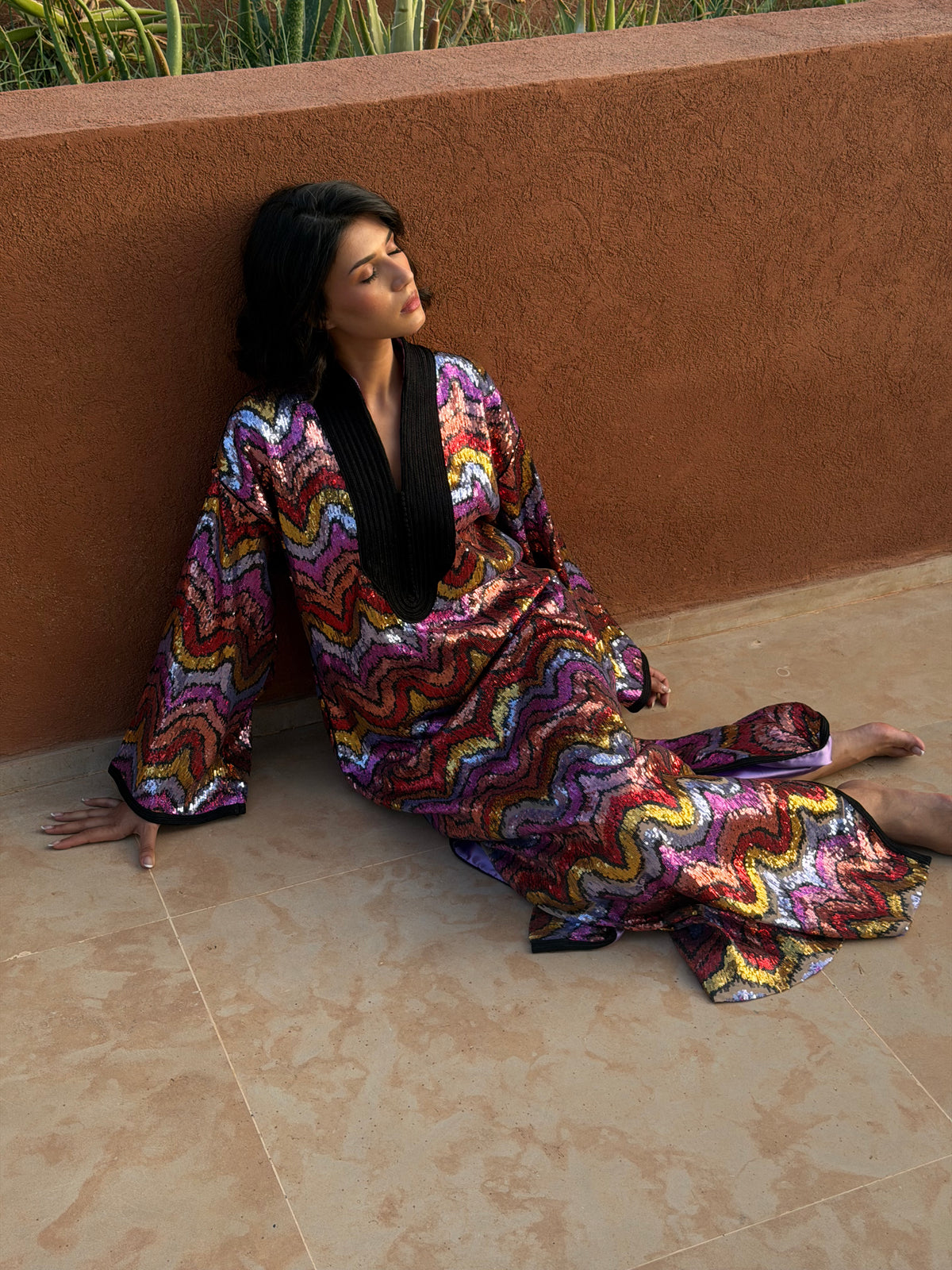
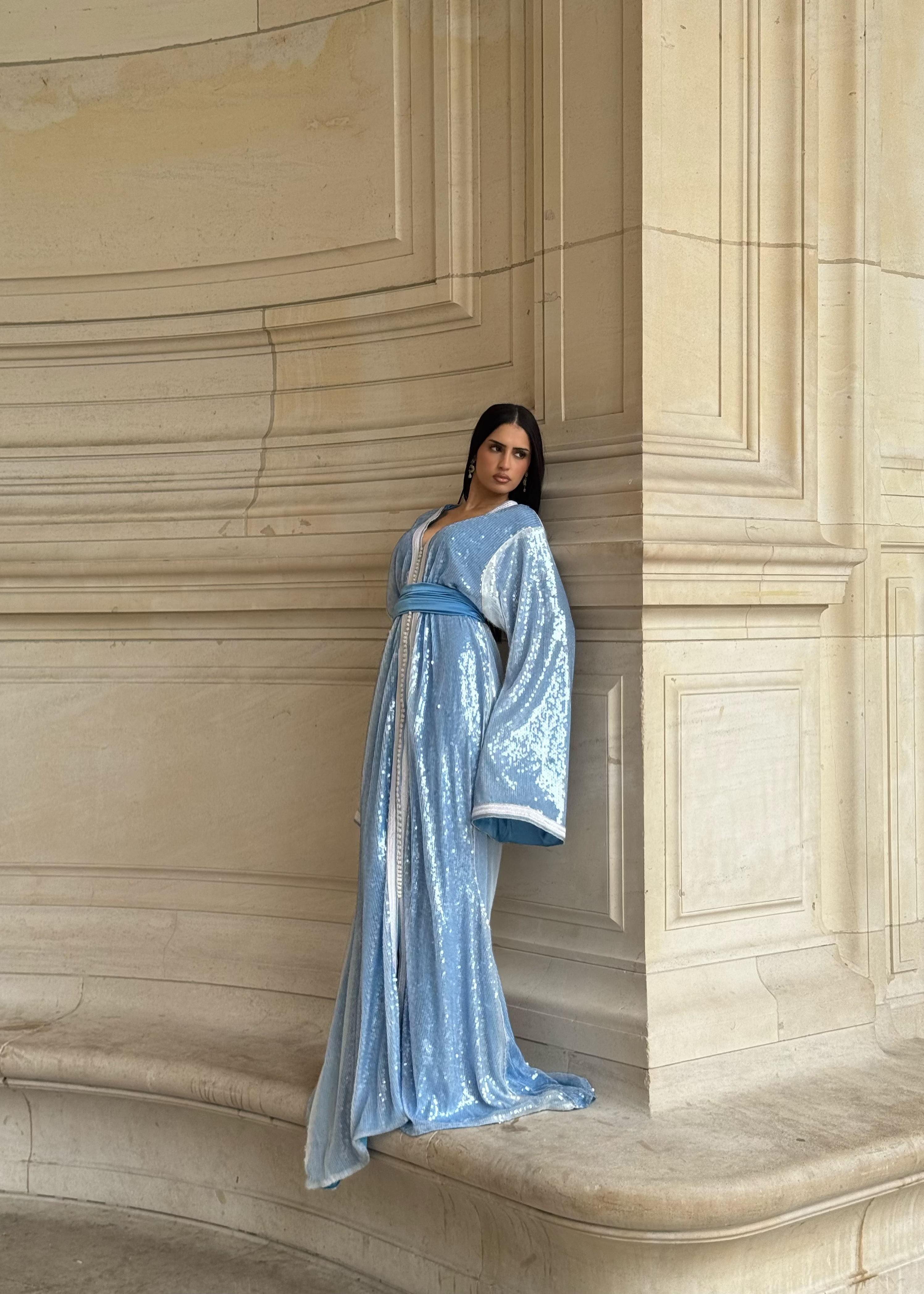
Beaded or sequined kaftans are the most delicate. Professional dry cleaning is strongly recommended, as water and friction can cause the embellishments to come loose. If spot cleaning is sufficient, gently dab the fabric with a damp cloth, taking care not to rub the embellished areas.
Ironing and Tidying Up
Always iron on a low setting, with the garment turned inside out, and place a thin cloth between the iron and any decorated areas. To store your kaftan, hang it on a padded hanger to preserve its shape, and protect it with a fabric cover (never use plastic, as it prevents the fabric from breathing).
Applying these tips to our pieces
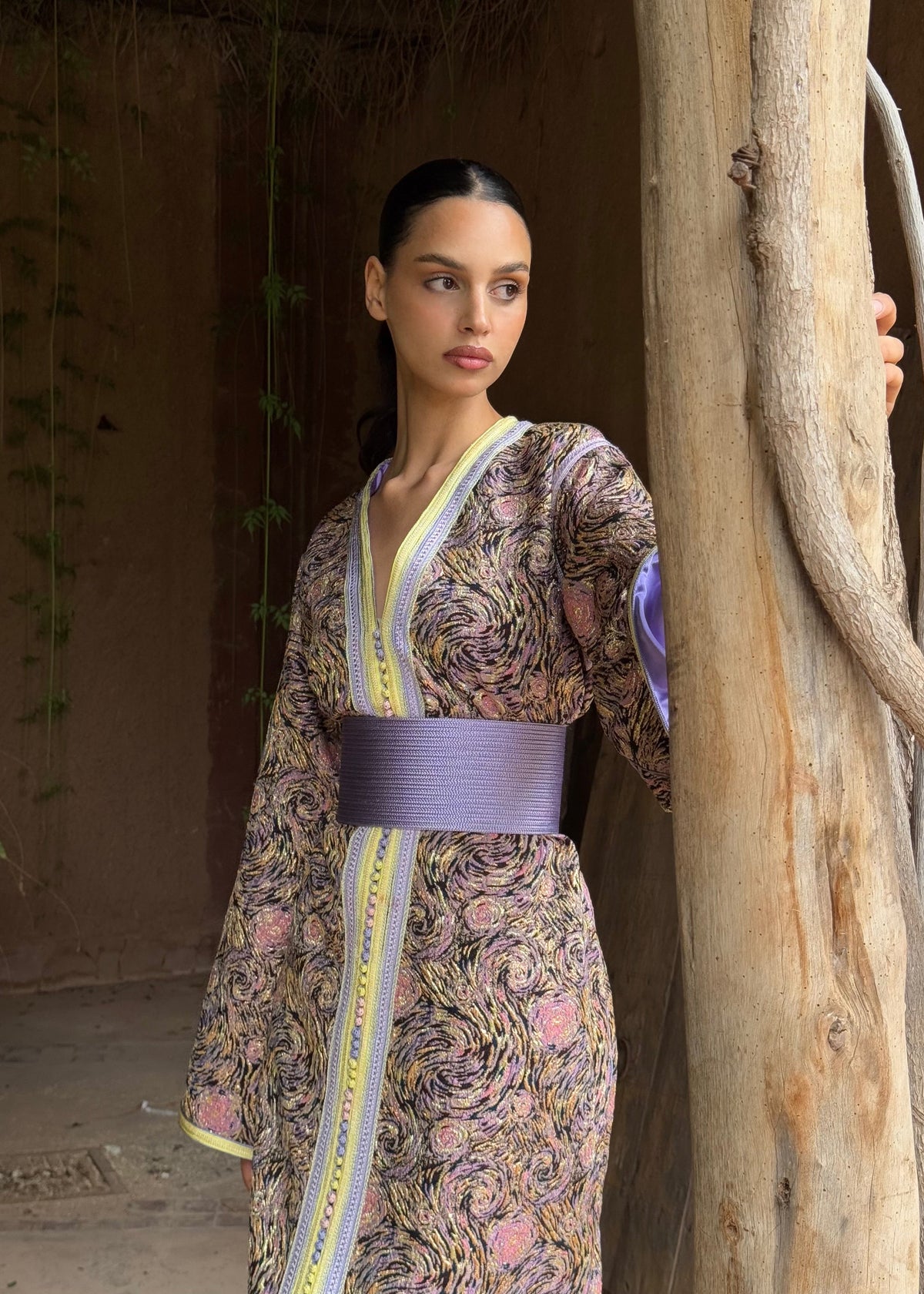
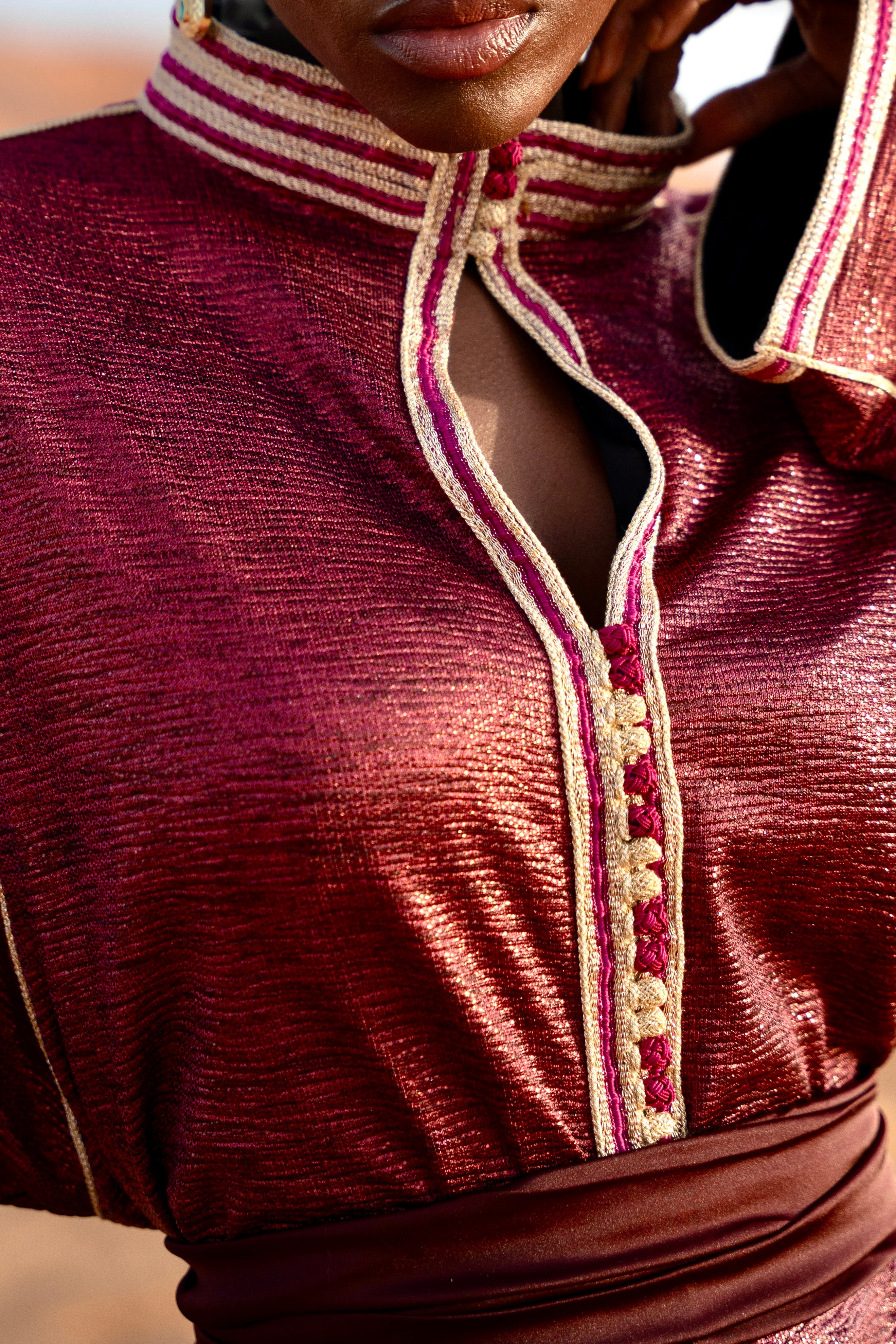
Here are a few concrete examples. A crepe kaftan such as our pink draped crepe kaftan needs a gentle touch: a delicate wash or dry cleaning according to the label, and ironing inside out with a thin cloth protecting the sfifa. For a sequinned piece such as the pink sequin kaftan, professional dry cleaning remains the safest option. As for the silk-lined brocade of the blue marbled brocade kaftan, keep it hanging in a fabric garment bag so it holds its shape.
Mistakes to avoid
- The tumble dryer: heat damages delicate fibres and can distort the sfifa and the aâkad buttons.
- Perfume sprayed straight onto the fabric: it can stain silk and dull the embellishments. Put on perfume before you get dressed.
- Storing it folded under a pile of clothes: it marks the embroidery and flattens the relief.
- Plastic for long-term storage: always choose a breathable fabric garment bag.
After an evening out, let your kaftan air on a hanger before putting it away: it is the simplest way to keep it fresh from one occasion to the next.
In summary
Caring for your kaftan means respecting its fabric: be gentle with silk and satin, handle lace with care, and dry-clean beaded pieces. With these simple steps, your outfits will retain their luster season after season. Discover our new styles in the kaftan collection.
Frequently asked questions
Can you machine-wash a kaftan?
It is not recommended for dressy pieces: silk, satin, lace and embellishments do not cope well with the drum. Always follow the label; failing that, choose a cold hand wash or dry cleaning.
How do you remove a stain from a kaftan?
Act quickly by gently dabbing with a clean, damp cloth, without rubbing, and avoid embroidered or beaded areas. For a stubborn stain or a precious piece, take it to a dry cleaner used to delicate fabrics.
How do you iron an embroidered kaftan?
On a low setting, inside out, with a thin cloth between the iron and the embroidery. Never run the iron directly over the sfifa, beads or sequins. A garment steamer held at a distance is a good alternative.
How should you store a kaftan between occasions?
Hang it on a padded hanger, in a fabric garment bag, away from light and damp. Avoid plastic, which stops the fabric from breathing, and do not fold it under other clothes.