
How the Moroccan Kaftan Became a Global Icon of Oriental Elegance
From traditional clothing to haute couture: discover how the Moroccan kaftan has become a global icon of Eastern elegance and artisanal luxury.
The Moroccan kaftan is much more than just a piece of clothing. It is a cultural and artistic symbol, recognized worldwide as the ultimate expression of Eastern elegance.
Once worn by queens and noble families, it is now celebrated on international runways, red carpets, and haute couture fashion shows.
But how did this masterpiece of Moroccan heritage take the fashion world by storm?
Here’s how the kaftan evolved from a traditional garment into a global icon of Eastern luxury.
1. The Moroccan kaftan: a timeless royal legacy
A garment born in palaces
The kaftan has its origins in the Arab and Andalusian dynasties. Imported to Morocco, it quickly became a staple of the royal court as a ceremonial garment symbolizing prestige and refinement.
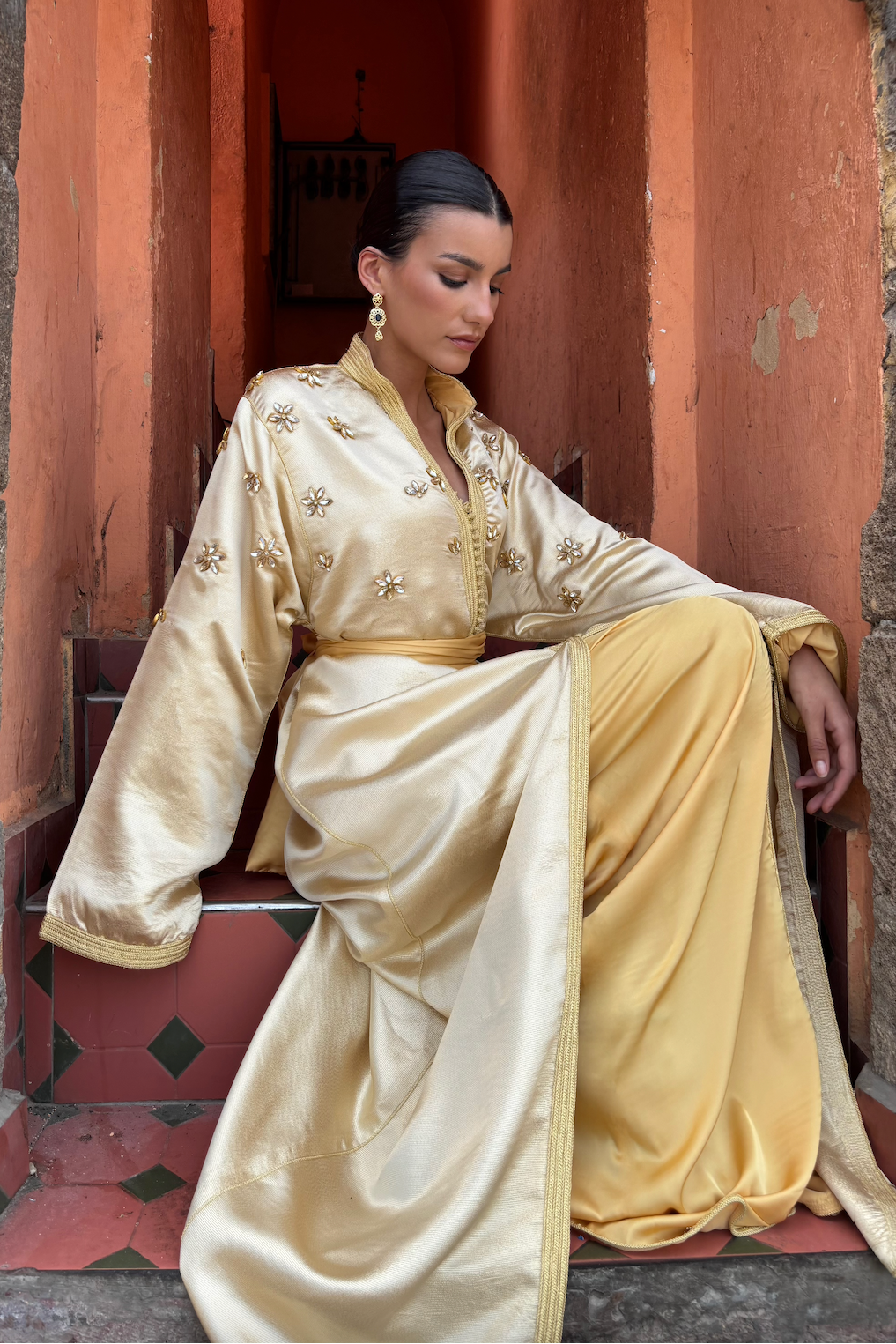
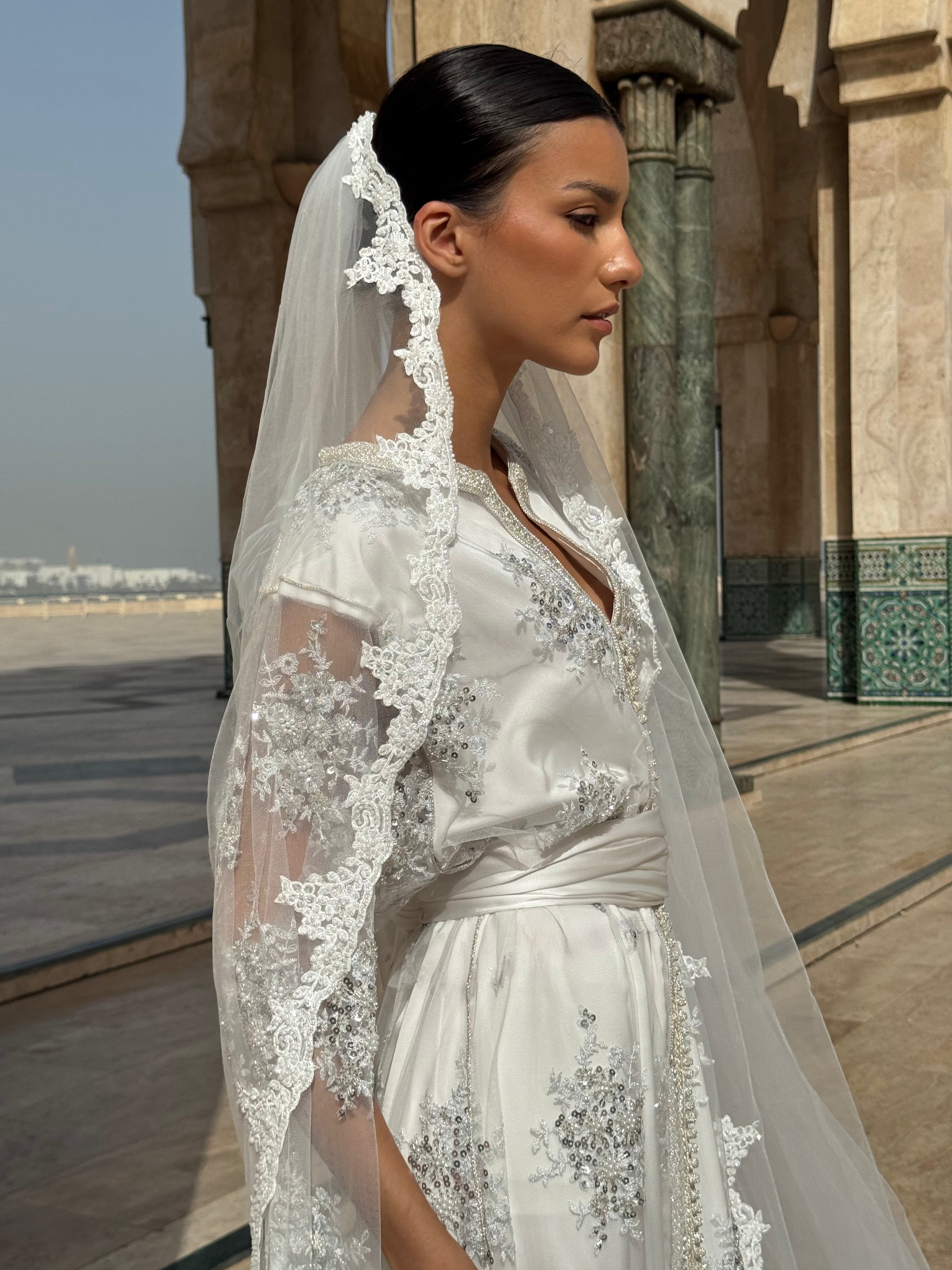
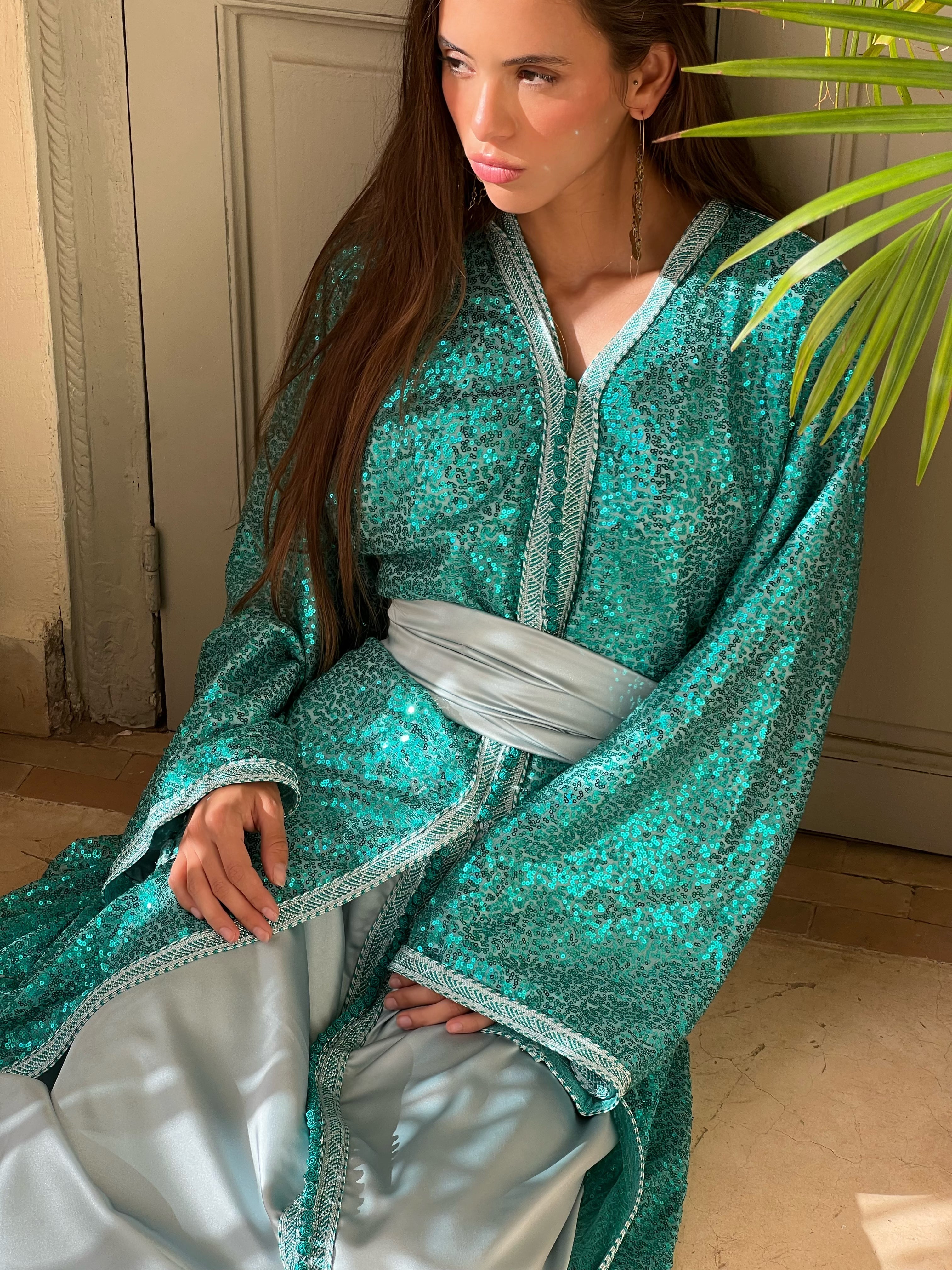
Crafted from luxurious fabrics—silk, velvet, satin, and brocade—it was adorned with delicate embroidery, gold thread, and hand-sewn pearls.
At that time, the kaftan represented the ultimate in elegance for Moroccan women—a garment steeped in history, status, and beauty.
The kaftan: a reflection of Moroccan craftsmanship
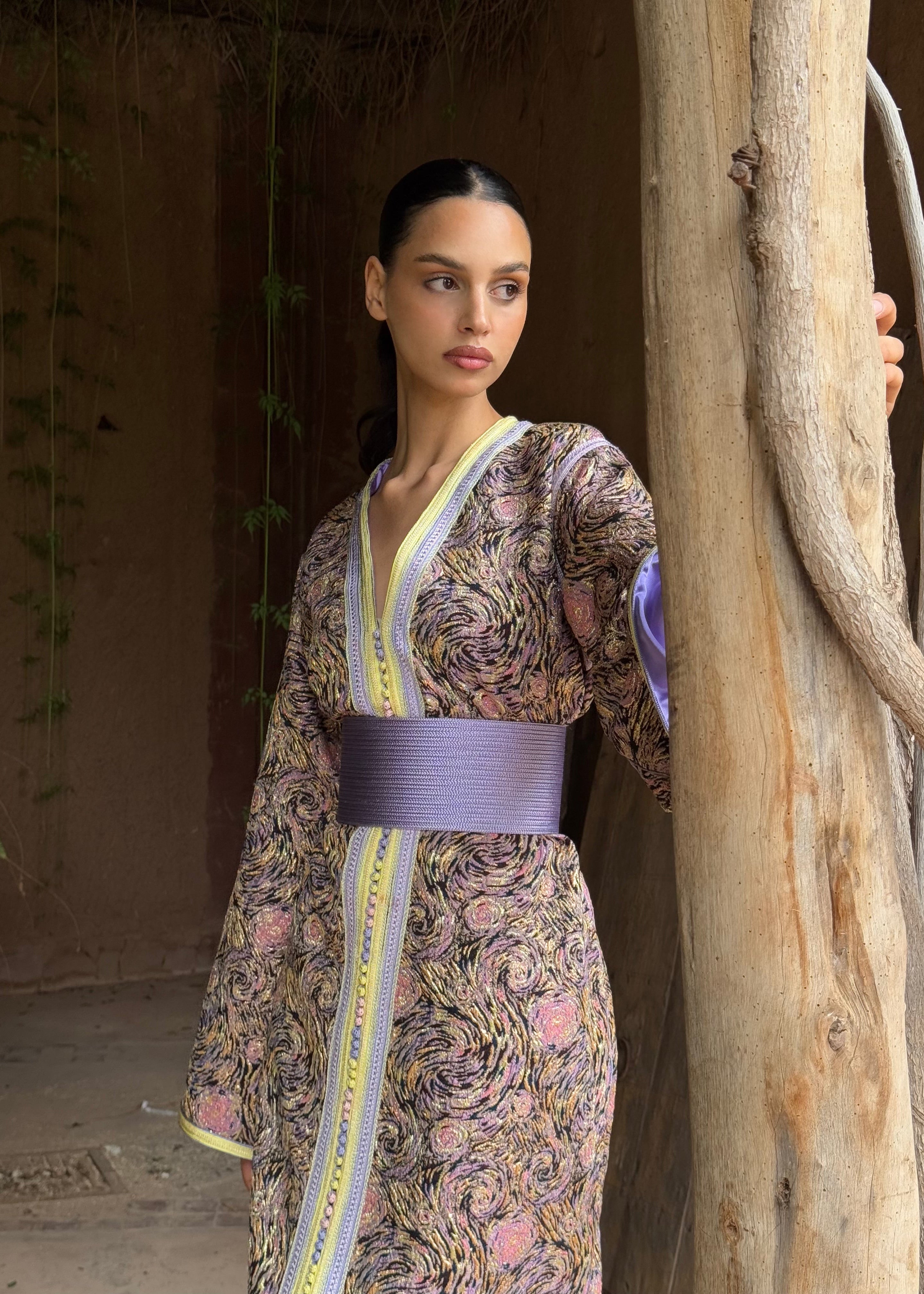
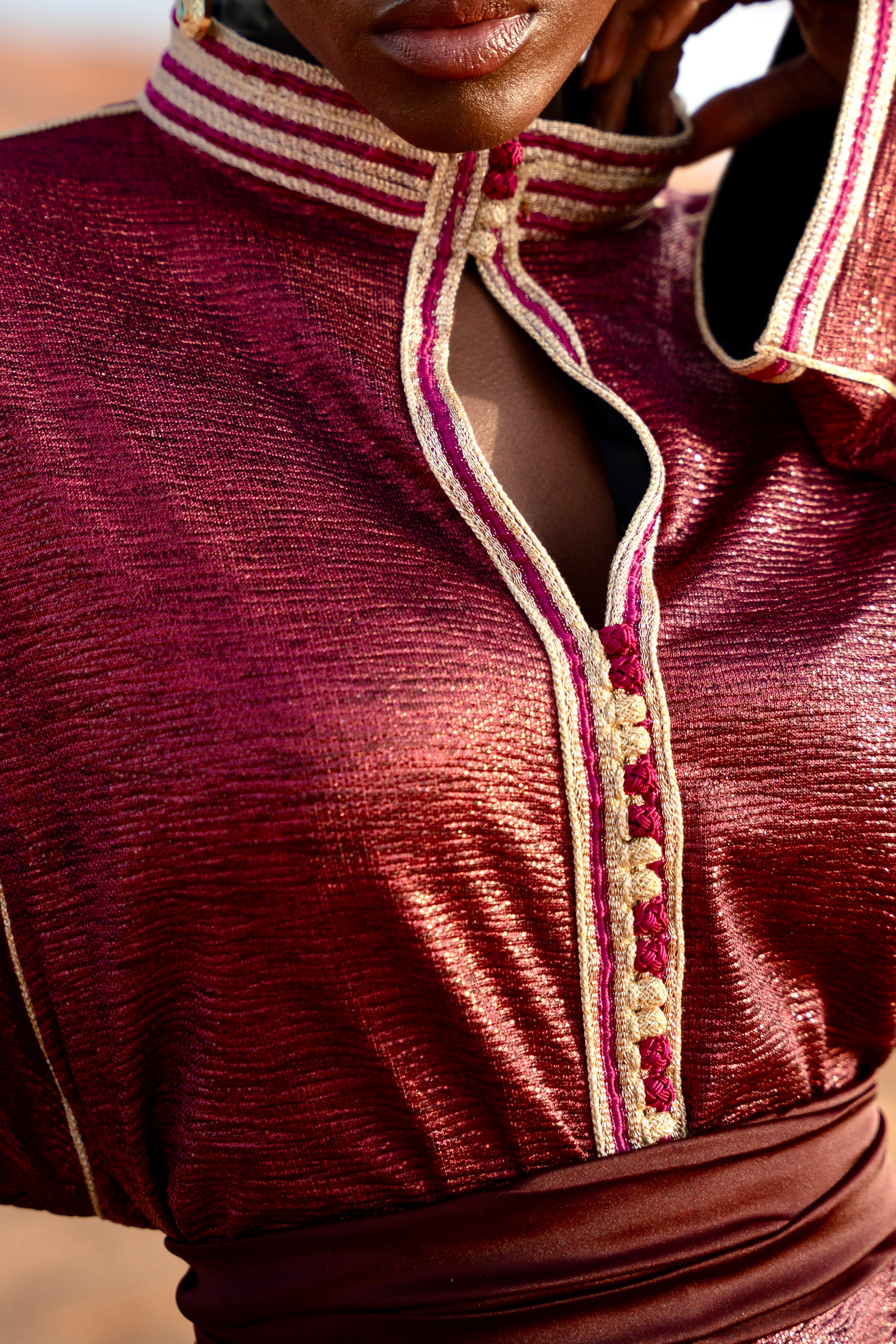
Every Moroccan kaftan is a work of art: every sfifa (embroidered braid), every aâkad (braided button), and every belt (mdamma) is the result of meticulous craftsmanship.
This artisanal heritage, passed down from generation to generation, has enabled Morocco to become the birthplace of the oriental kaftan, combining creativity, tradition, and excellence.
2. Opening Up to the World: From Heritage to Haute Couture
The Turn of the 1990s
The kaftan truly took off internationally in the 1990s thanks to the launch of the “Caftan du Maroc” event in Marrakech.
This event allowed Moroccan designers to showcase their collections on professional runways, highlighting traditional Moroccan fashion in a contemporary context.
Designers such as Tamy Tazi, Myriem Belkhayat, Fadila El Gadi, and Zineb Joundy have redefined the kaftan’s style by blending Eastern influences with modern touches.
The result: a garment capable of rivaling Parisian haute couture.
International Recognition
Riding this wave of popularity, the Moroccan kaftan has made its way to the fashion capitals: Paris, Dubai, London, and Milan.
It has become a symbol of cultural pride and a luxury item, admired for the quality of its craftsmanship and the beauty of its embroidery.
Today, it ranks among the most sought-after Middle Eastern garments in the world.
A source of inspiration for leading fashion designers
Prestigious fashion houses such as Dior, Elie Saab, Jean Paul Gaultier, Valentino, and Dolce & Gabbana have drawn inspiration from the Moroccan kaftan.
Its flowing silhouettes, long sleeves, gold embroidery, and luxurious fabrics have influenced numerous collections of Middle Eastern haute couture.
The kaftan has thus transcended borders to become a universal aesthetic symbol: one of femininity, nobility, and Eastern grace.
Celebrities and the “Oriental Glamour” Effect
From Beyoncé to Jennifer Lopez, Naomi Campbell, and Rihanna, many celebrities have worn kaftan-inspired designs at galas, festivals, and on the red carpet.
These appearances have propelled the kaftan into international fashion magazines, cementing its image as an icon of Eastern luxury and Moroccan glamour.
On Instagram and Pinterest, the hashtag #CaftanMarocain now has millions of posts, a testament to its global success.
3. A garment that is constantly evolving
Between Tradition and Modernity
The Moroccan kaftan continues to evolve. Designers of the new generation are giving it a contemporary twist:
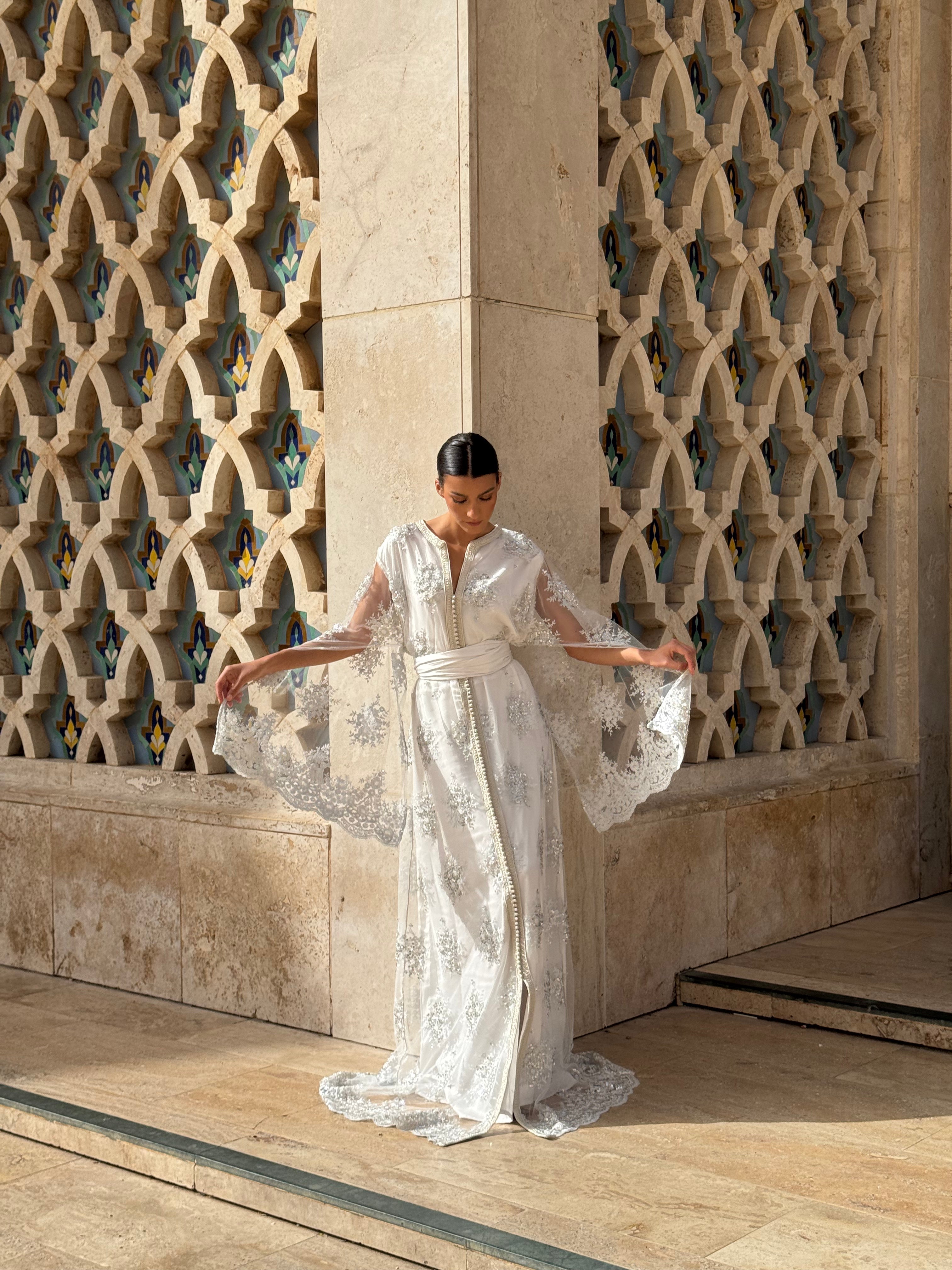
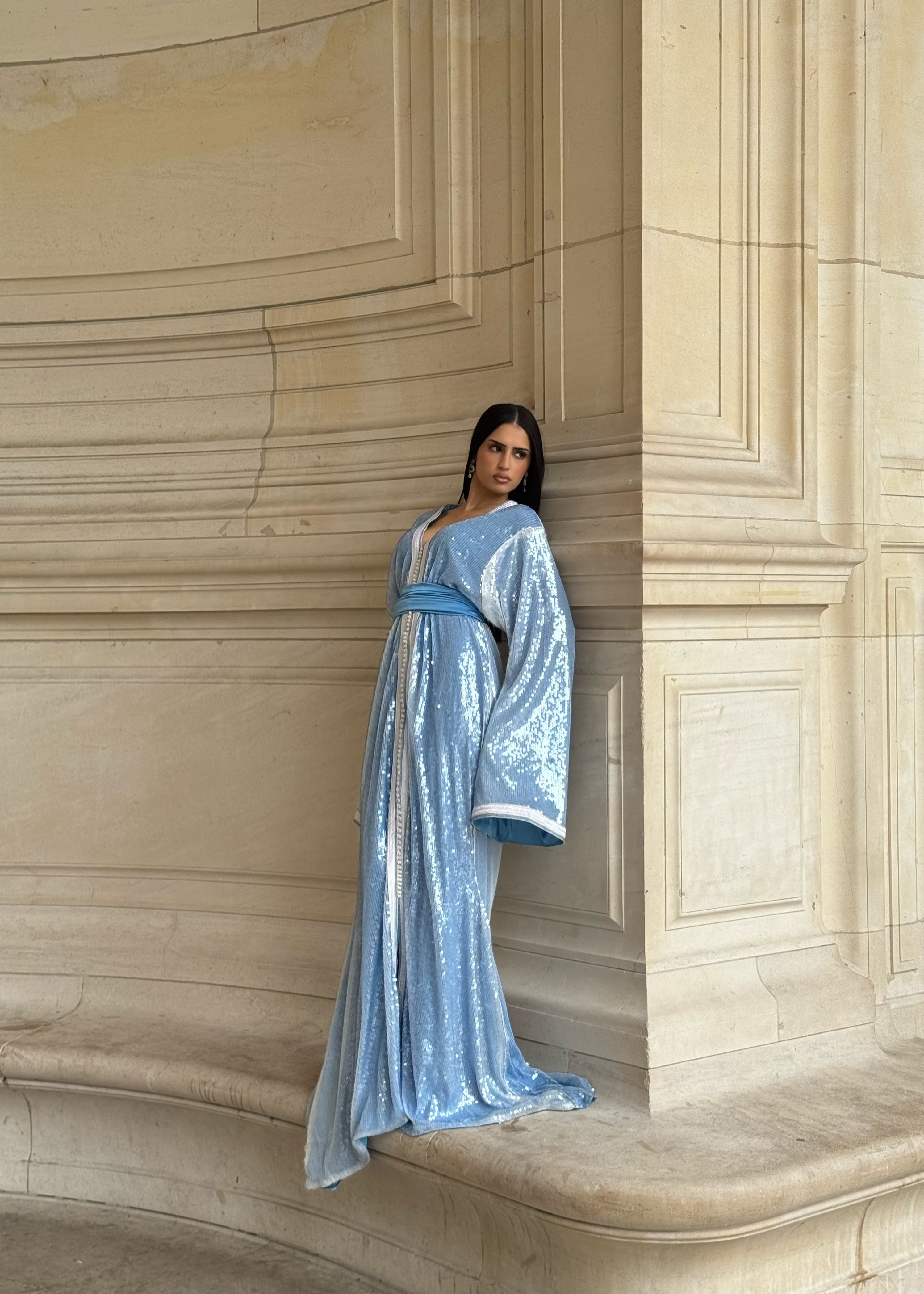
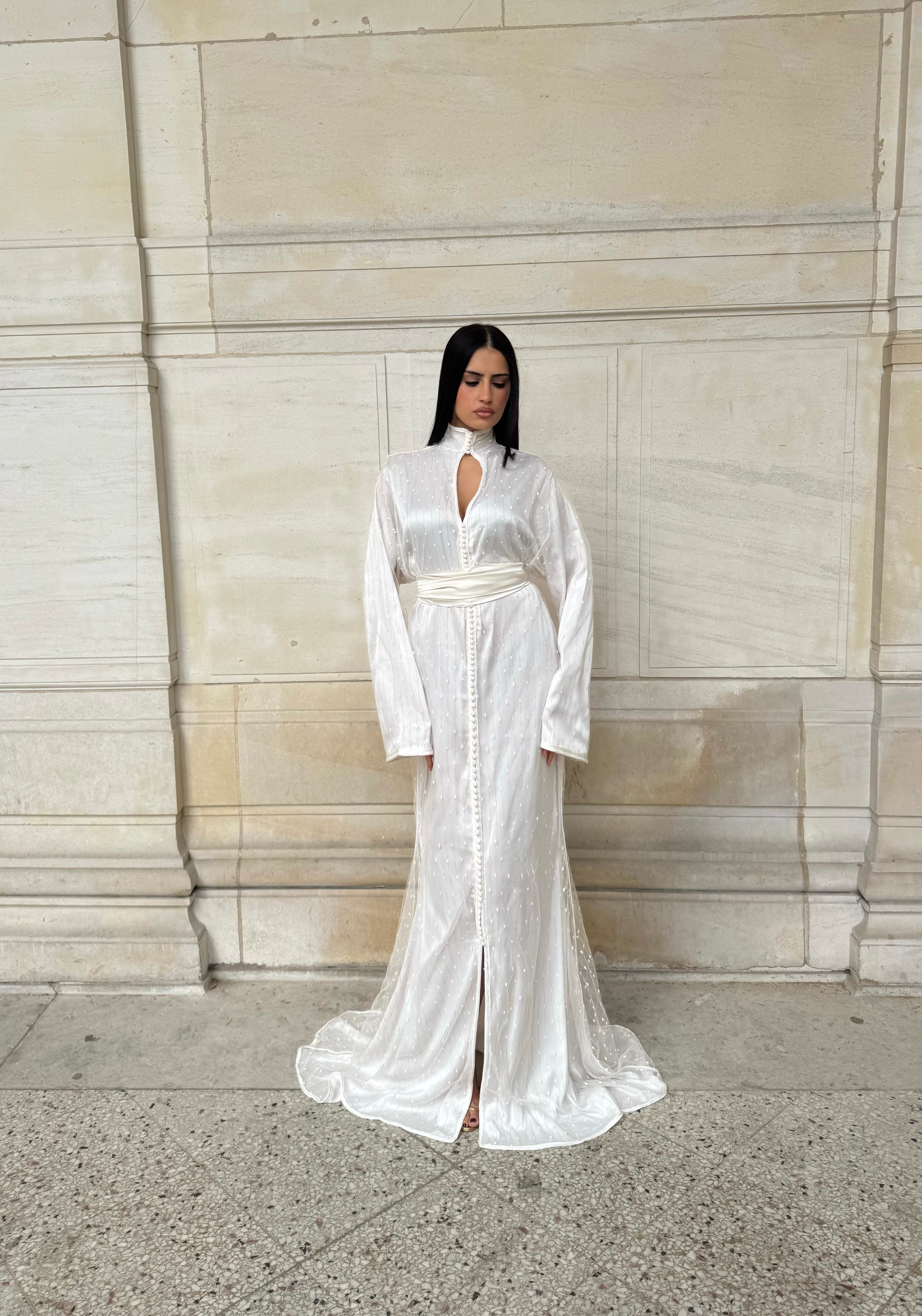
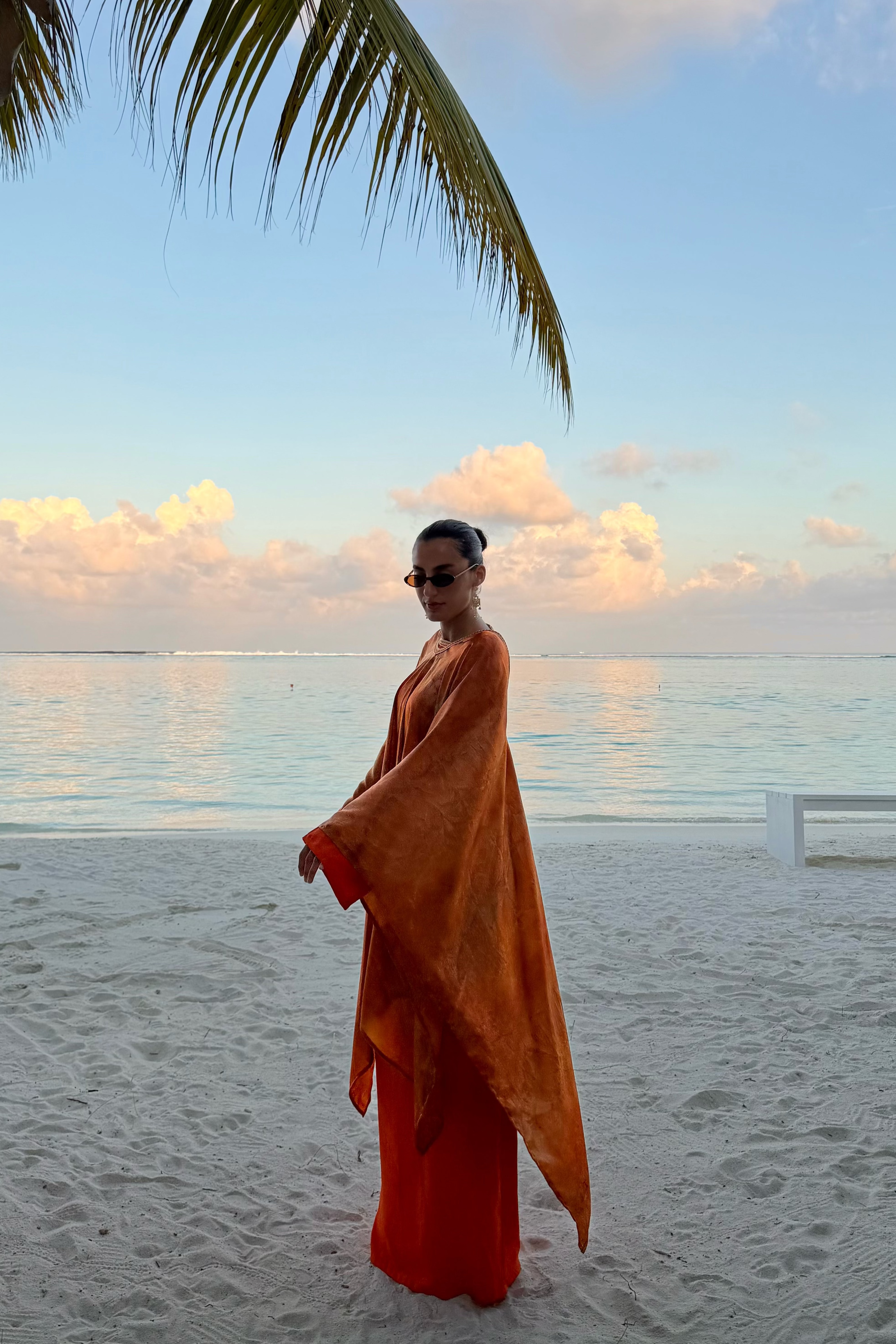
clean lines, lightweight fabrics, pastel colors, minimalist details… all while preserving the authenticity of traditional craftsmanship.
Nowadays, modern kaftans are worn not only at weddings, but also in everyday life and at international social events.
This blend of tradition and modernity appeals to a global audience seeking authenticity and distinction.
Moroccan crafts: the cornerstone of its reputation
Behind every kaftan are expert artisans, true guardians of a unique heritage.
Their mastery of weaving, maalem embroidery, sfifa, and beading makes the Moroccan kaftan an exceptional product recognized by haute couture enthusiasts.
This artisanal excellence helps promote “Made in Morocco” on the international stage.
The kaftan: a living cultural heritage and a universal icon
The Moroccan kaftan is now considered part of Morocco’s intangible cultural heritage.
It is a symbol of cultural identity, a source of national pride, and an ambassador for Middle Eastern fashion around the world.
Fashion shows in Marrakech, Casablanca, Dubai, and Paris continue to celebrate this rare blend of tradition, luxury, and modernity.
The kaftan has become a global style icon—at once a haute couture piece, formal wear, and a symbol of timeless elegance.
The Moroccan kaftan has stood the test of time without ever losing its soul.
From its royal origins to its status as an international fashion icon, it remains the perfect balance between heritage and innovation.
Worn by women around the world, it continues to embody Eastern beauty, artisanal finesse, and Moroccan elegance.
The kaftan is no longer just an outfit: it is a living story, a link between the past and the present, and one of the most beautiful expressions of Eastern luxury.